Read this blog: The one where we have two breakfasts
Sunday 22nd and Monday 23rd March 2026
Sunday was another early start as we had booked to go whale watching. Once again we arose before dawn and Dilanka took us to the reception office of Mirissa Water Sports where we were both given a cup of coffee and Matilda was offered a sea sickness tablet. Maybe Robert was looking sufficiently nautical that they assumed he would not need one?
We had met some other travellers earlier in the holiday who had advised us to accept the sea sickness pills when we were offered them. Matilda however had planned ahead. She took the advice of Matt, a seasoned sailor who joined us in Tresco last year, who suggested taking a tablet the day before as well as one on the morning of travel.
We had asked Dilanka if he would be coming with us but he suffers quite severely from sea sickness and informed us he was definitely staying on dry land. Matilda was glad she had taken the tablets.
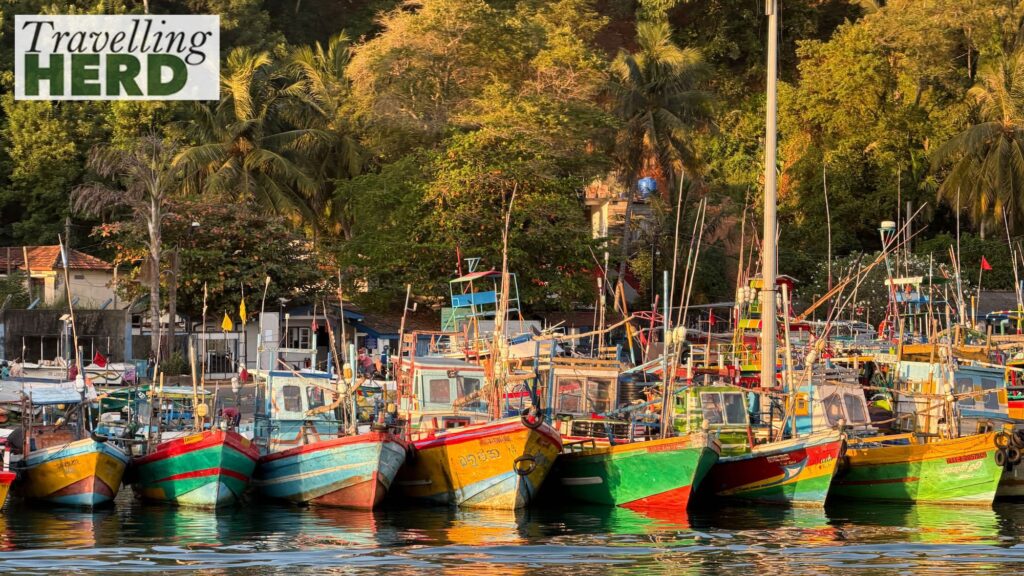
Staff then escorted us through the vibrant Mirissa Fisheries Harbour to board the boat.
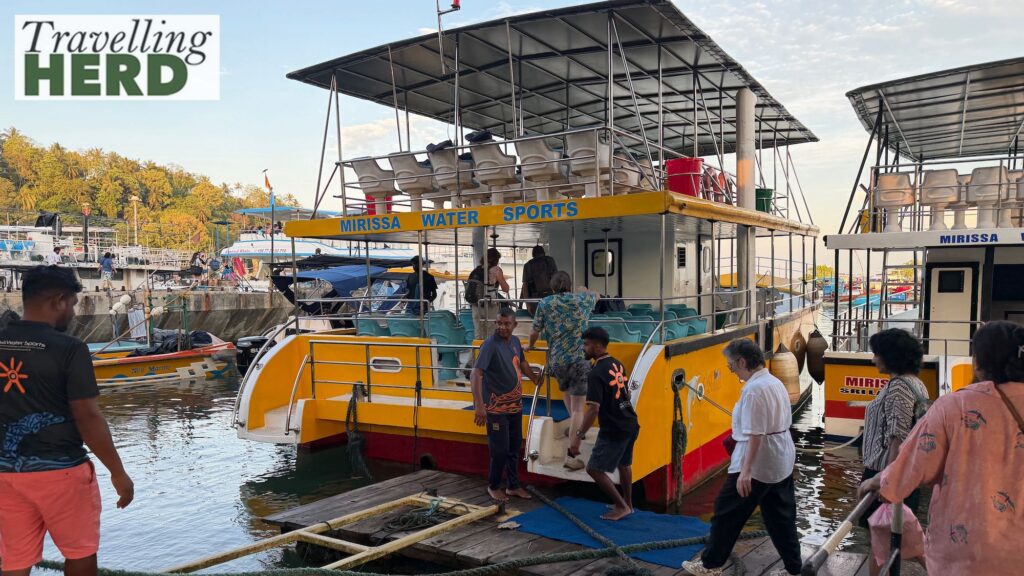
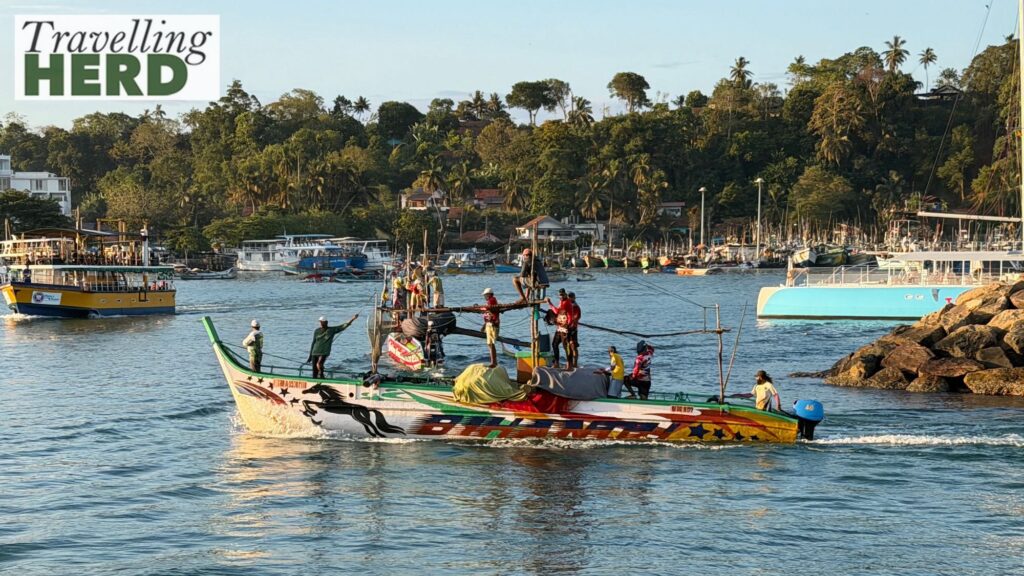
As well as fixed seating towards the rear of the boat there were cushions laid out around the front in case people needed to lie down. Leaving the harbour we passed many colourfully painted fishing boats.
Later, on the journey back to the port, one of the crew went round to all the passengers with an information booklet to talk about the creatures we had seen. This was very useful as we would not otherwise have been sure which species we had been watching.
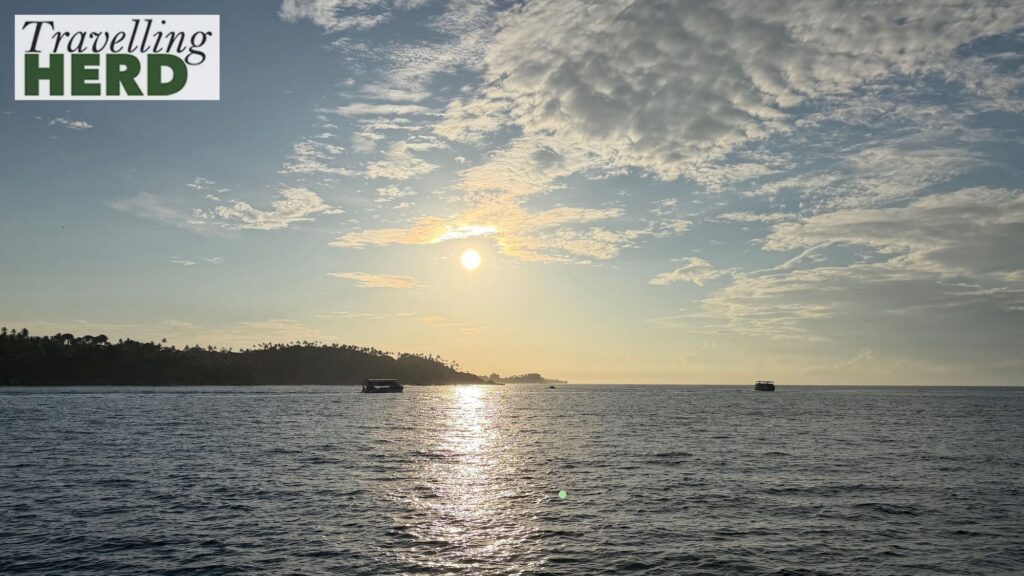
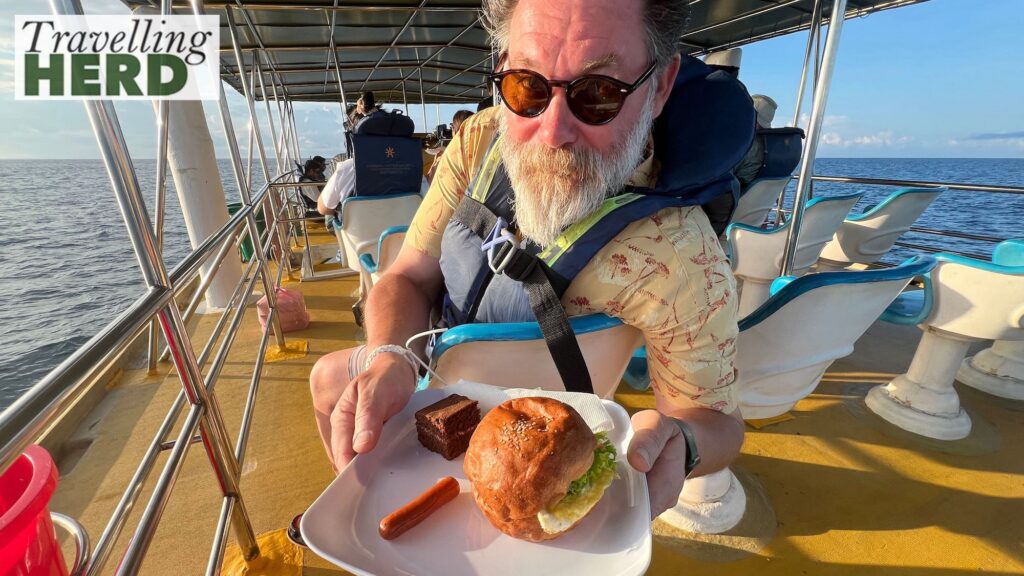
On our way out to sea [see Selfie of the day] we were given our first breakfast comprising an omelette roll, sausage and chocolate cake.
Once out into deeper waters we saw a large pod of Spinner Dolphins swimming close to the surface.

Spinner Dolphins are three-toned with a dark grey back, lighter flanks and a cream/white belly. They grow to about two metres in length and weigh 50-80kg.
We had never heard of this species before but they are tremendous acrobats and named for the high spinning leaps they make out of the water [see below]. We could not imagine what evolutionary purpose this would serve but it was mesmerising to watch: it just seemed so joyful. Subsequent research informed us that spinning is both a form of communication as well as a means of removing parasites such as suckerfish, which are dislodged when the dolphins land back hard onto the sea. We were pleased to read that they do also seem to do it for sheer pleasure and to impress partners. We were certainly impressed: they can rotate up to seven times in a single leap. However, they do not always do this: the crew told us that although they had seen the pod the previous day the dolphins had not been spinning because the sea was too calm.
The other major sighting was a Fin Whale. Much like the rangers and guides at Yala National Park the day before the boats seemed to share information about sightings and all congregated around the same area. The first indication that a whale was nearby was a tall narrow ‘blow’ of water rising about four metres into the air.
Typically Fin Whales will blow four or five times before cresting the surface and then diving. They then stay submerged for around 10 minutes. The boats waited during this time, looking for the next blow, then suddenly one boat would head off at speed and the others would all follow.

The Fin Whale is the second largest whale and the second largest animal on earth after the Blue Whale. They can grow to 27m or 88 feet in length.
Returning to shore [see Video of the day], the harbour once again looked busy and colourful.
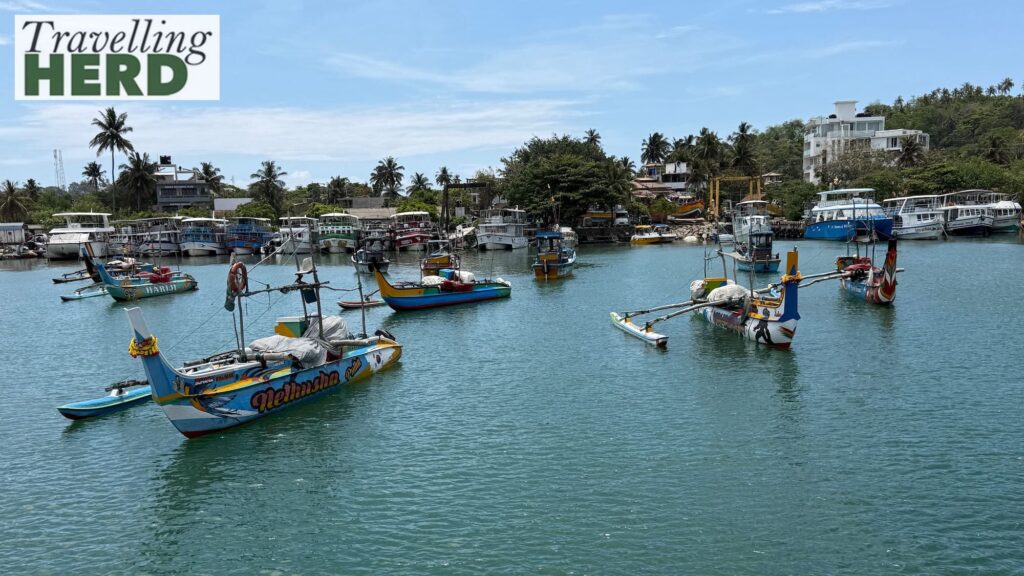
Some of the boats were returning with their catch.
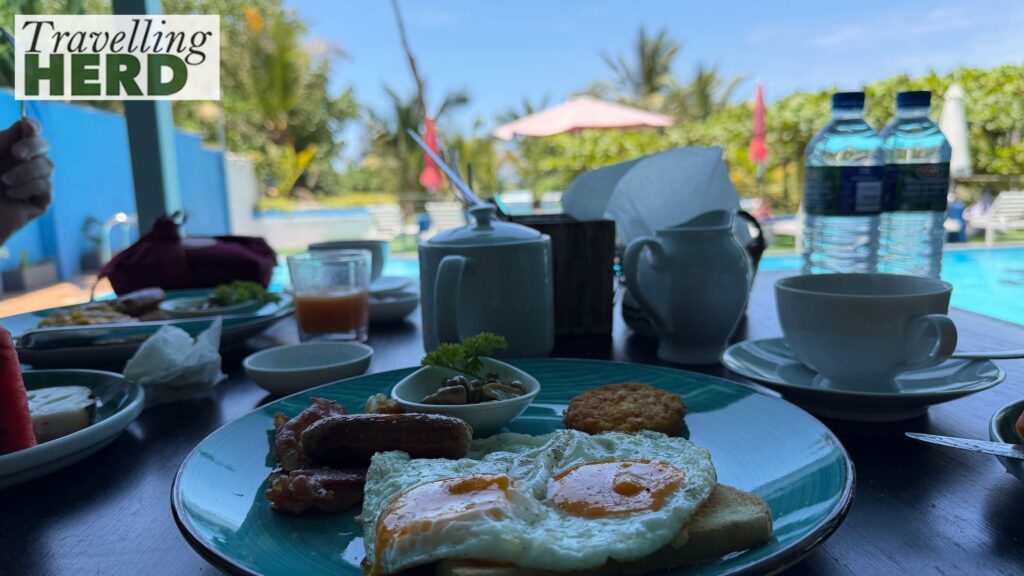
Dilanka drove us back to our hotel where we had our second breakfast. Having been awake for several hours it felt more like lunch but was very tasty.
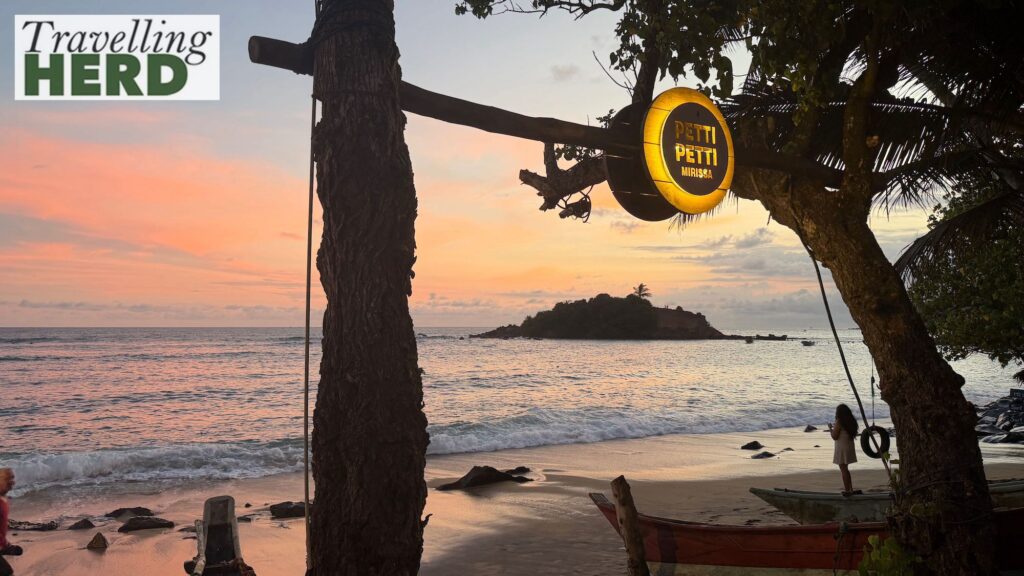
Later that day we enjoyed sunset over the beach.
We had asked Walkers if Dilanka could stay with us for another day and take us to a turtle hatchery then on to Galle. Happily he was available and willing to stay on, so on Monday morning we had a leisurely start to the day.
We had thoroughly enjoyed our stay at the Beach Marissa Hotel. The staff and owners were all friendly and helpful and the location was excellent. We were chatting to one of the sons of the hotel owner who was a recently qualified doctor when we mentioned that we needed to get our visas extended in Colombo and he advised us that, because of the disruption to travel, there was currently no charge for this. Our original plan was to stay in Sri Lanka for 34 days and Robert had applied for the extension on-line on the 28th February before news broke about the war in the Middle East. Unfortunately the system only allows on-line payments to be made from a gmail account which we do not have. We had consequently been asked to present our passports at the Department of Immigration and Emigration in Colombo and pay. We will now make sure we query whether the payment is in fact due.
The doctor mentioned that he preferred the colder weather in England and had spent some time training in Manchester, despite having been told by some friends in Bristol that it “was grim up north”. We had to laugh.
We had only one scheduled stop on the way to Galle: the Koggala Sea Turtle Farm and Hatchery.
Information about turtle hatcheries advises you not to visit one where they keep the newly hatched turtles in water for too long before releasing them into the sea. We were a little concerned when we first walked in and discovered there were several tanks containing turtles.
We were assigned an English-speaking guide who explained that these turtles were all injured or ill and were undergoing medical treatment before they could be released back into the wild. They were, in effect, undergoing therapy in the turtle hospital.
A display at the entrance listed eight varieties of turtle, five of which can be found in the seas around Sri Lanka: the Oliver Ridley Turtle; the Loggerhead Turtle; the Leatherback Turtle; the Hawksbill Turtle and the Green Sea Turtle.
Sadly, but somehow all too predictably, almost all of the injuries were inflicted by man albeit hopefully unwittingly. Conditions ranged from having lost a limb in a fishing net or from propeller damage through ingesting plastic [a bag floating in the ocean looks a lot like a turtle’s favourite food – jellyfish] and injury by fish hooks.
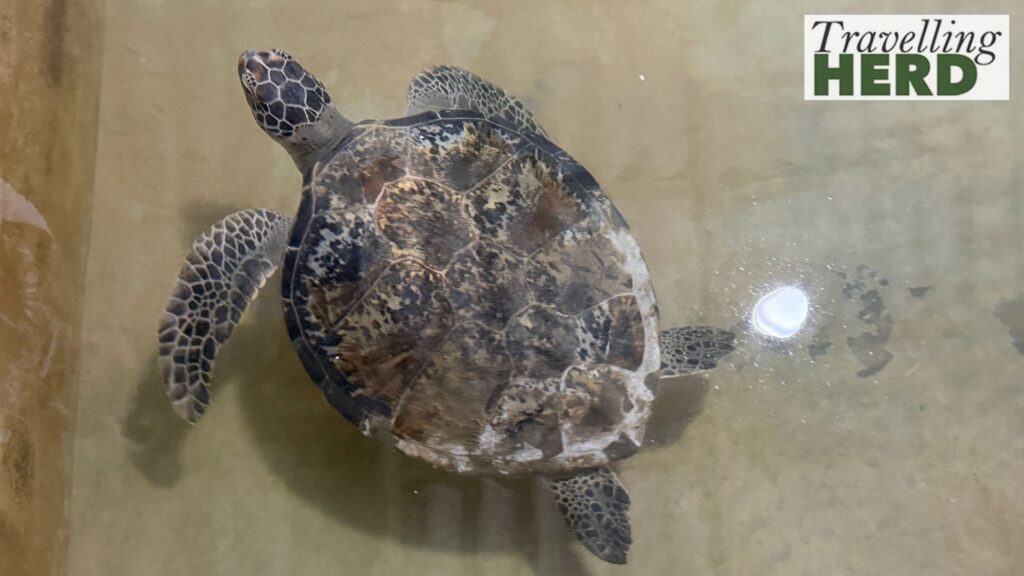
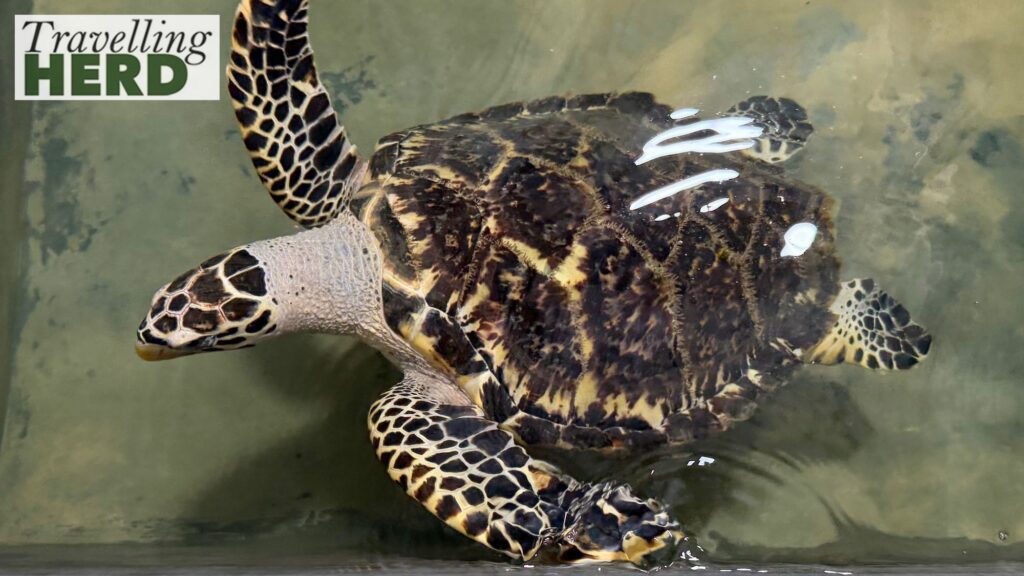
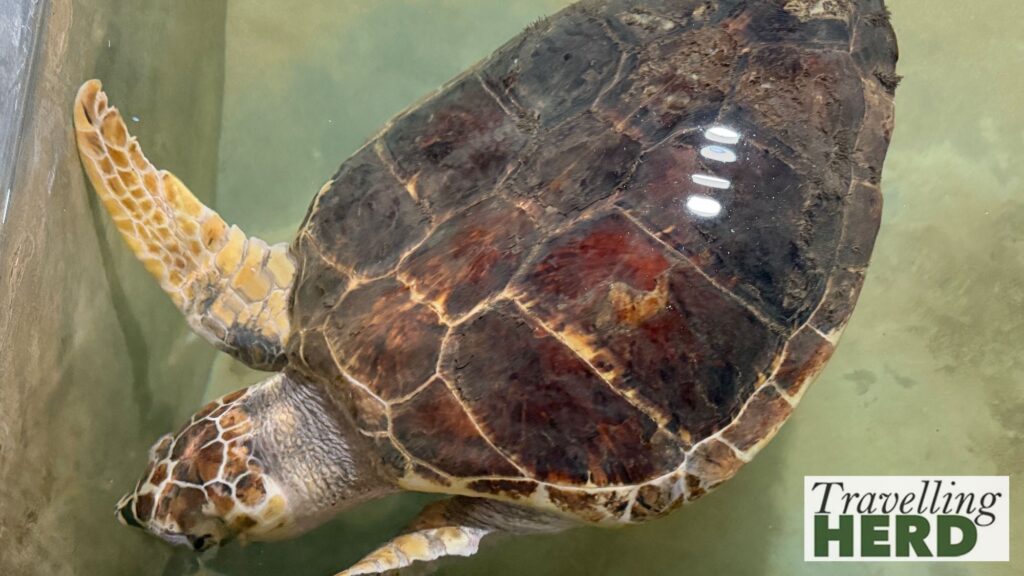
The first tank contained a turtle [see above] that had been found with so many barnacles attached to it that they were depleting the turtle’s calcium levels and weakening its shell. The pale areas are where the shell has become thinner. The barnacles had been safely removed and the turtle was being given calcium therapy, allowing its shell to repair before being released back into the ocean.
Several of the turtles had lost limbs and there were plans to fit them with prosthetics but the turtles needed to be fully grown before this could happen. It is important to balance the medical needs of the turtles with minimising their time in captivity.
One of the saddest cases was a turtle which had suffered damage to its shell resulting in air getting trapped under it so that it was no longer able to dive.
We were allowed to touch the shell of a Loggerhead Turtle.
Surprisingly there were also two albino turtles there.
Turtle haemoglobin is very rich in iron, having specifically evolved for diving and surviving in low-oxygen (anoxic) conditions. Tragically some people steal eggs to eat believing they have health benefits. Thankfully, others alert the Koggala Sea Turtle Farm and Hatchery when they discover a batch of eggs so that the staff can excavate them and re-bury the eggs within the hatchery to allow them to incubate in safety.
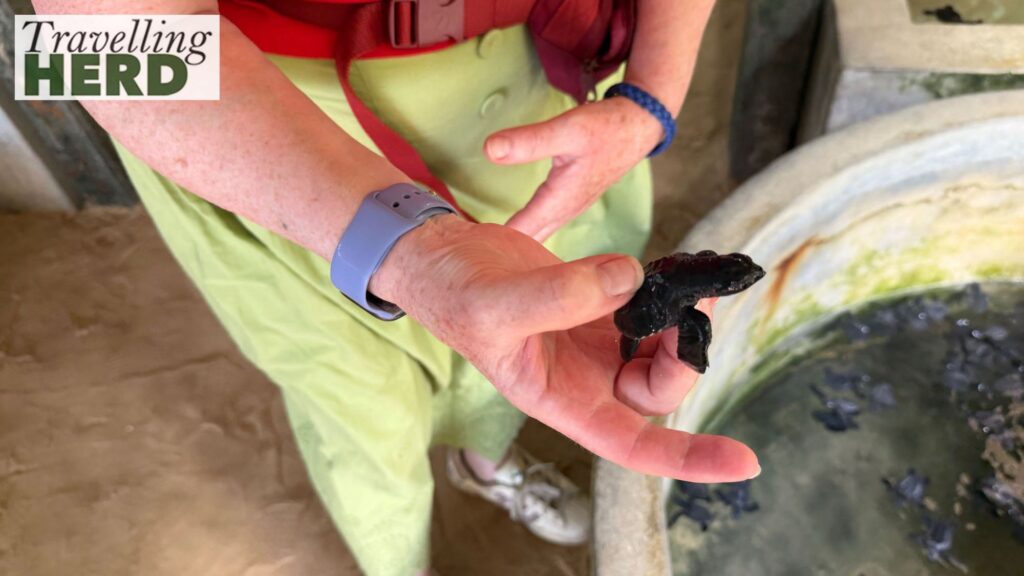
We were allowed to hold a hatchling and shown how to do this gently between our thumb and middle finger.
The sex of a turtle egg is determined by the incubation temperature during the middle trimester of development.
Cooler temperatures below 27.7ºC or 81.1ºF will produce predominantly males whilst warmer temperatures [310C and above] will produce females.
Intermediate temperatures will produce a more balanced mix of the sexes. Rising global temperatures therefore pose a risk as this produces more female hatchlings and disturbs the equilibrium.
These turtles had hatched earlier on the morning of our visit and were going to be released into the sea later in the day when there would be fewer predators around.
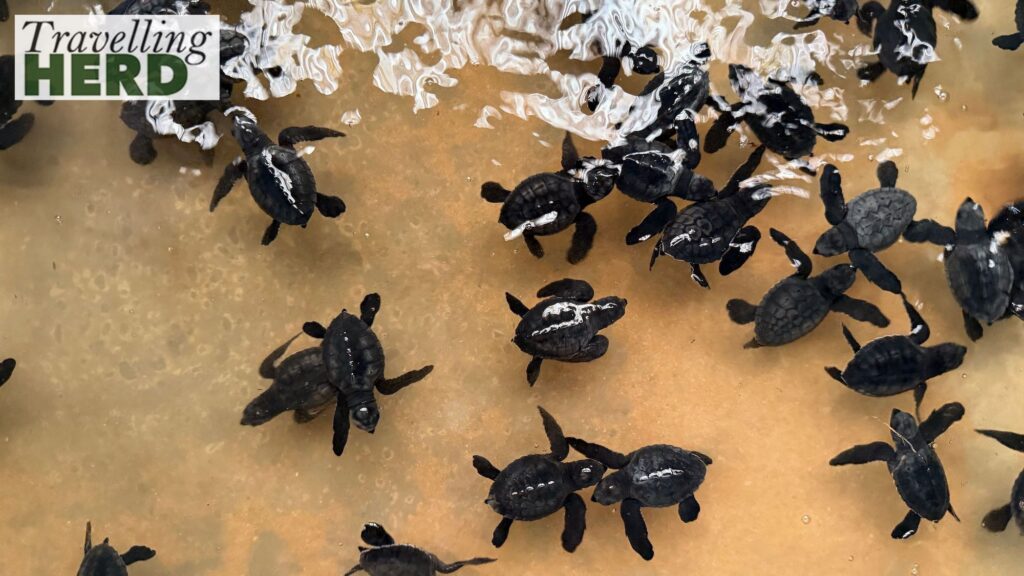
A female turtle is able to store viable sperm in her body for an extended period – sometimes several years – before choosing a good time for fertilising and laying her eggs. Our guide told us that only one in one thousand hatchlings will survive to adulthood. It takes 20 to 30 years for a turtle to reach maturity and they can live for over 50 years. So, although Koggala Sea Turtle Farm and Hatchery released 40,000 hatchlings into the sea last year, their efforts will only result in an extra 40 turtles reaching maturity.

The hatchery is an area close to the beach where eggs have been buried with a sign giving the plot number, the date they were laid, the breed and the number of eggs.
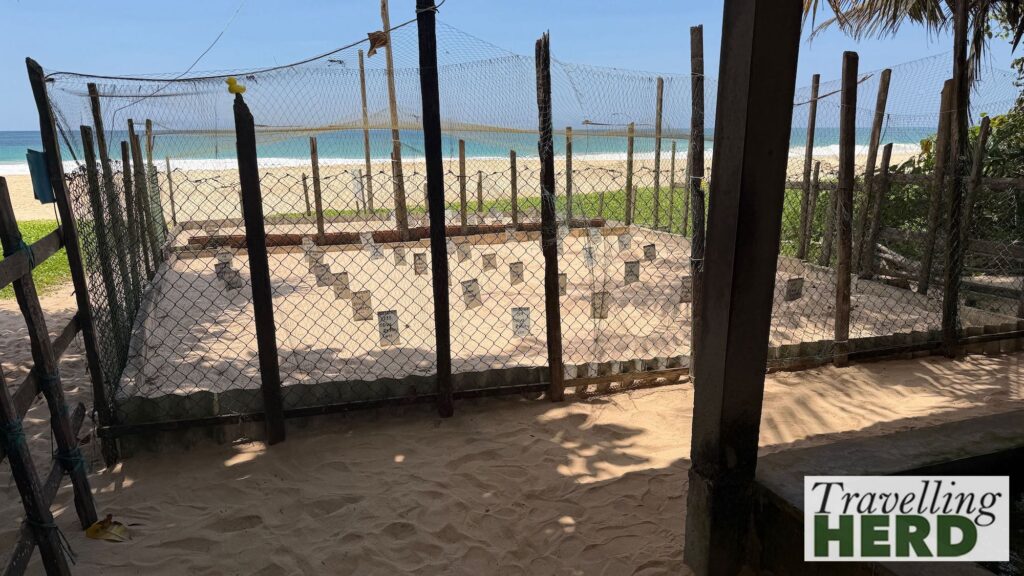
The small wall prevents the hatchlings heading straight for the sea.
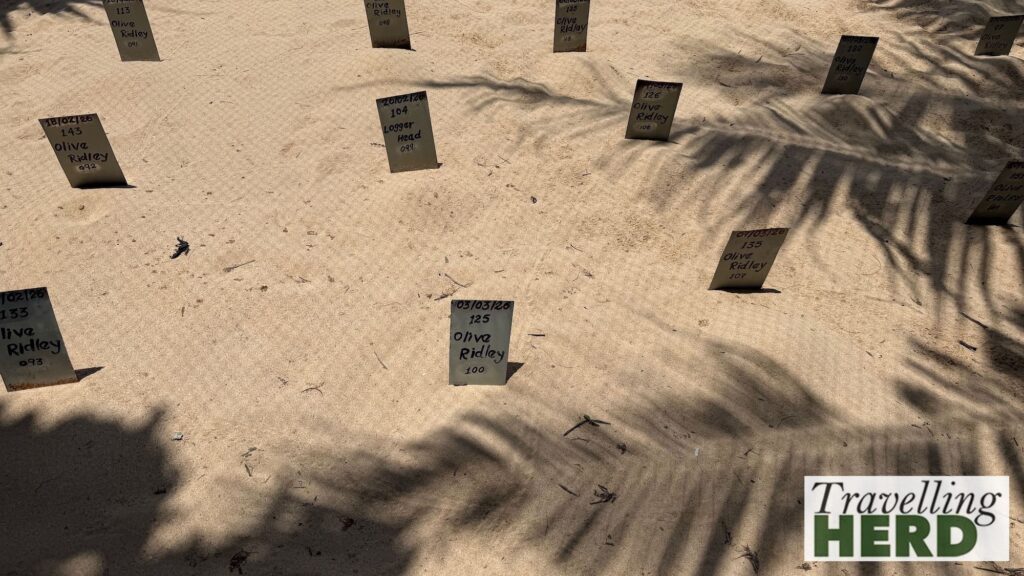
Eggs will hatch in about 60 to 90 days depending on the species and the temperature.

The age of a turtle can be estimated by the growth rings and length of its shell.
It was sad to think so many of these hatchlings would become the victims of predators.
As we left Dilanka pointed out a land monitor in the car park.
Dilanka took us to the Lady Hill Hotel in Galle where we were sorry to be saying goodbye: we have enjoyed both his company and his knowledge.
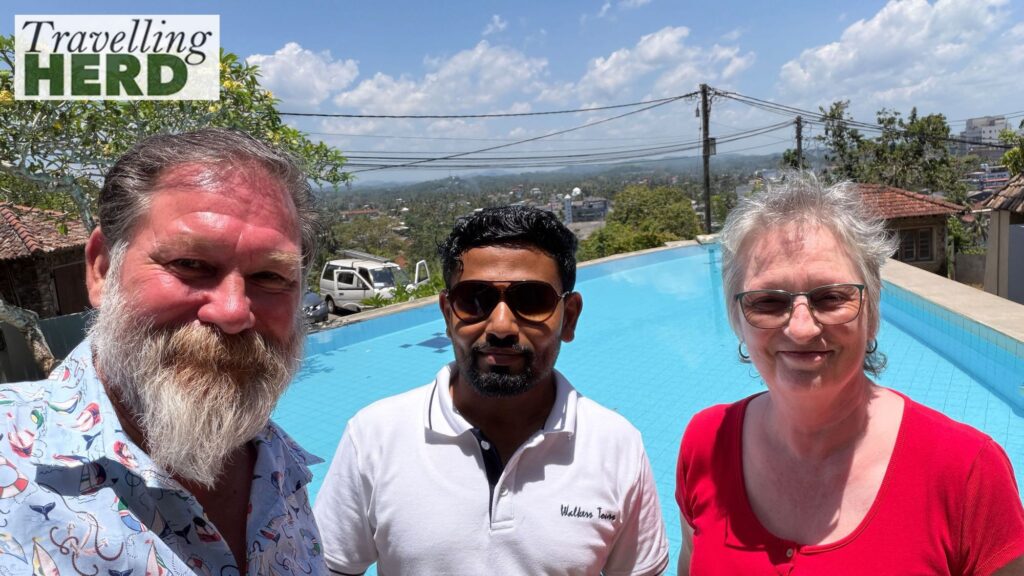
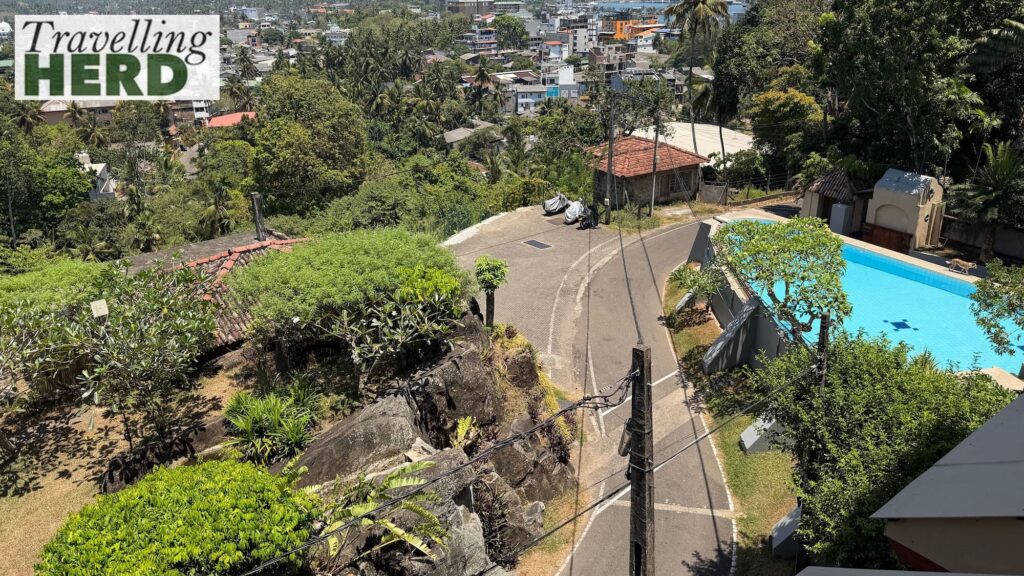
The Lady Hill Hotel markets itself as having a birdseye view of Galle but with hindsight we felt it would have been preferable to be closer to the town.
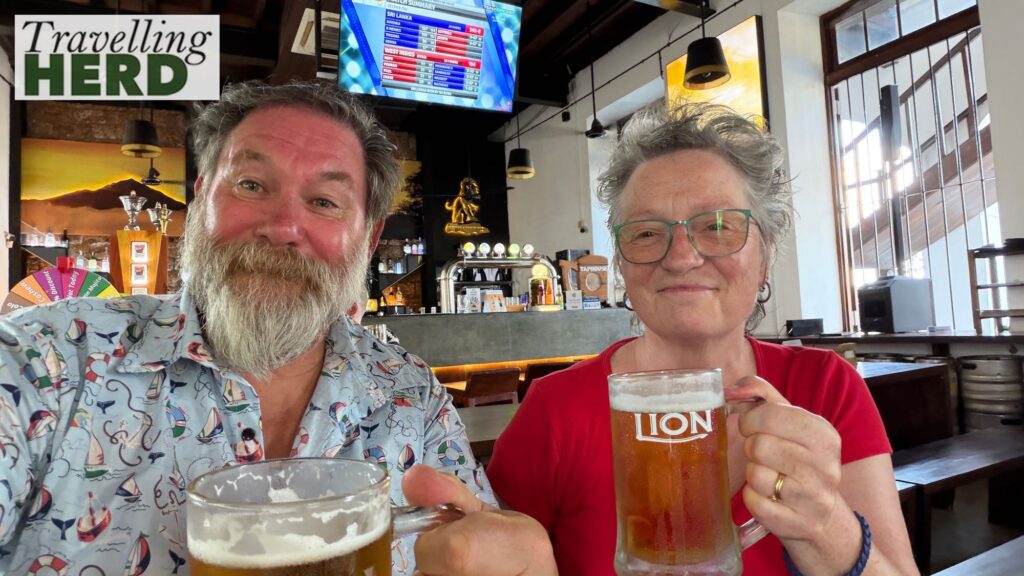
We ordered a tuk tuk to take us down into Galle for a cold beer and some food where we discovered the Taphouse and later somewhere to eat.
Video of the day:
Selfie of the day:

Dish of the day:

Route Map:


Discover more from TravellingHerd
Subscribe to get the latest posts sent to your email.