Read this blog: The one where we approve of dipped strawberries
Friday 13th and Saturday 14th March 2026
After breakfast we went for a short stroll round Kandy, past the ubiquitous Clock Tower. The majority of places we have visited have one. They were built predominantly by the British as a central landmark to help people to find their way around the town. In some instances they are also memorials.

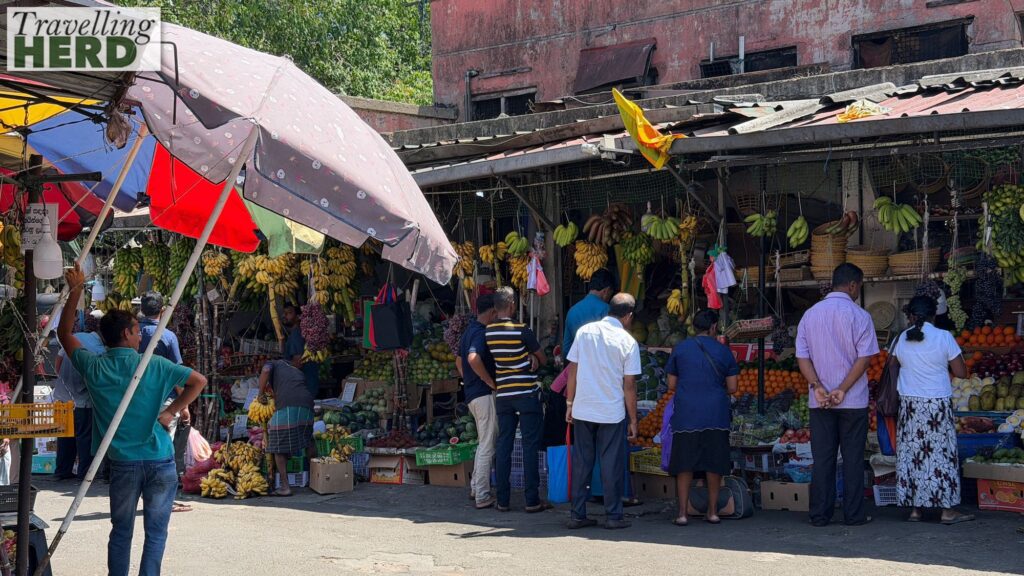
We then went to look at the Municipal Central Market. Many tourists seemed to be buying spices and Matilda was quite tempted to take some vanilla pods home, having seen them recently growing in a spice garden, but was not sure if this was a permitted import to the UK.
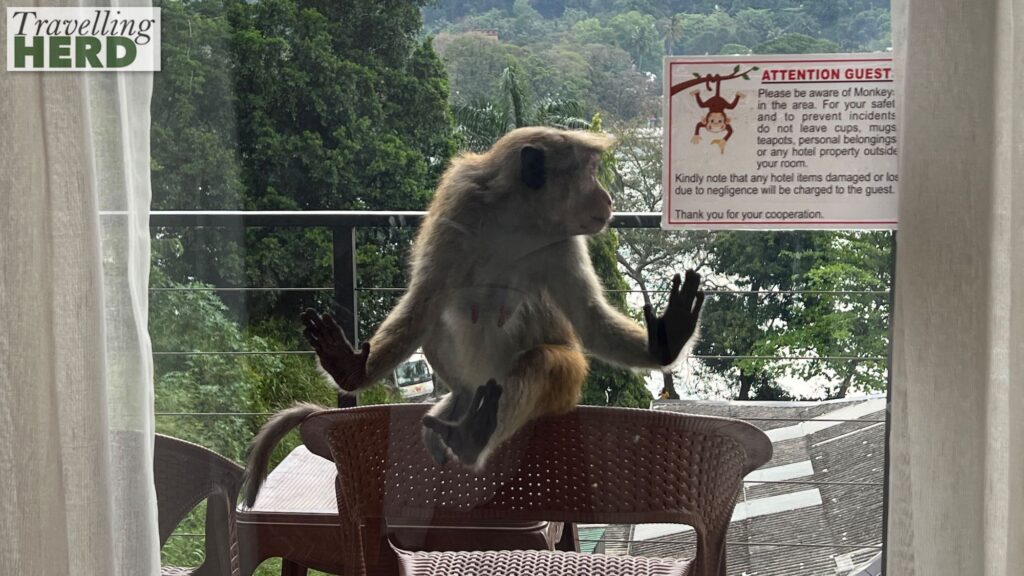
In the afternoon, the monkeys made a return appearance on the balcony where they seemed to be interested in coming inside.
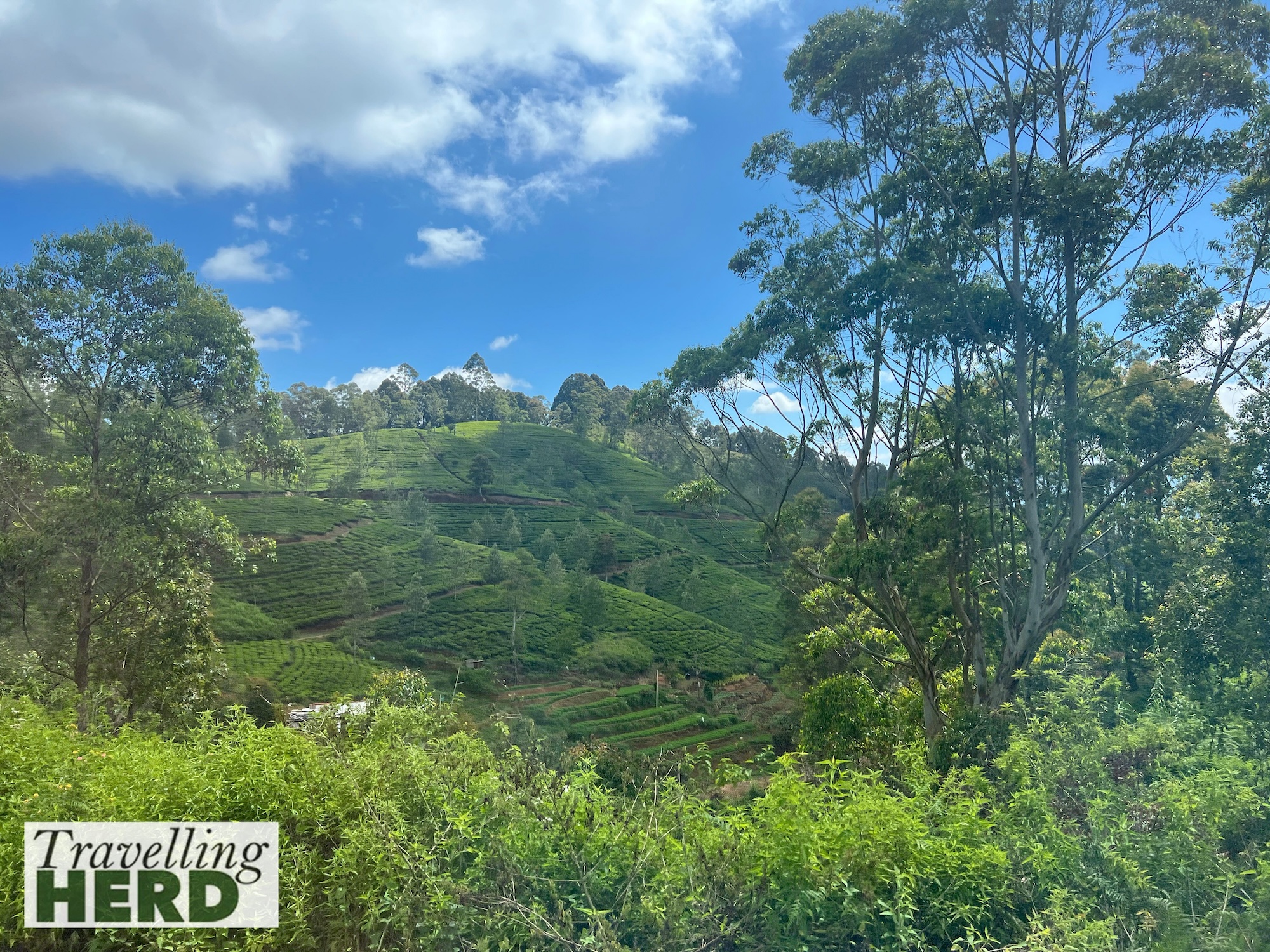
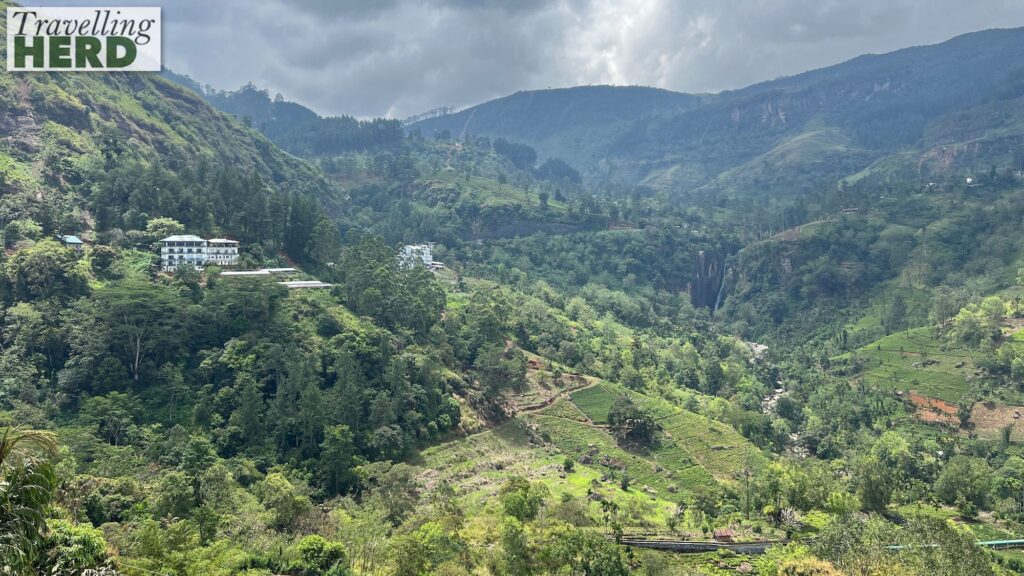
On Saturday we had originally planned that we would get the train from Kandy to Nuwara Eliya which is also known as ‘Little England’. Unfortunately this section is not yet running after the cyclone damage at the end of last year. We therefore made the journey by car and the driver took us to a number of sights on the way. The first was a stop to admire scenery and distant waterfalls which we believe to be the 109 m or 358 ft high Ramboda Falls – made more dramatic because of the impending rain. The driver also stopped a little further on so we could get a better view of a roadside waterfall [see Video of the day].
Then we were taken to the Kingswood Tea Factory near Ramboda.
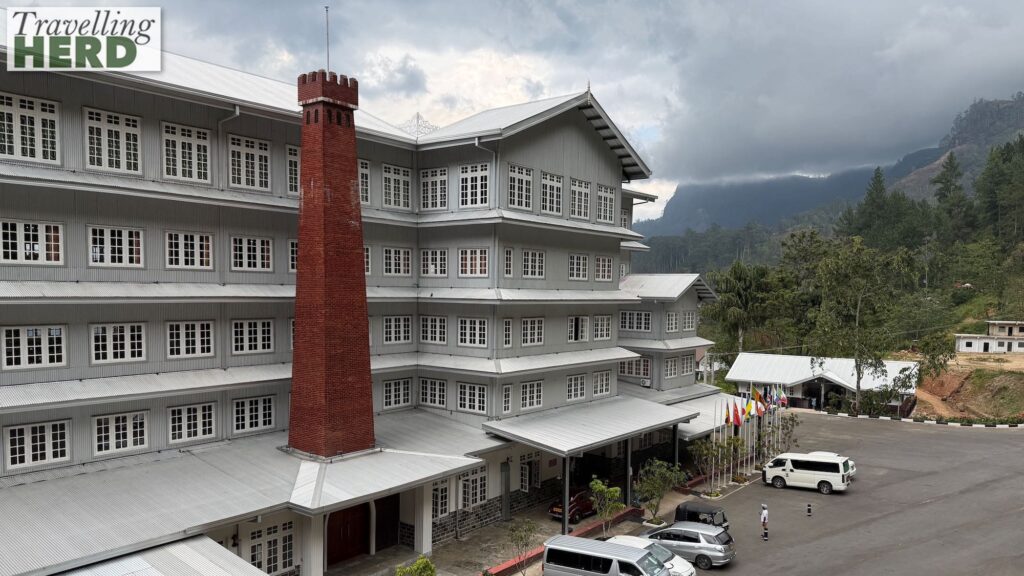
Here they claim to combine colonial history with modern tea production. As we arrived we were allocated an English speaking guide to show us round and explain the various stages of tea production.
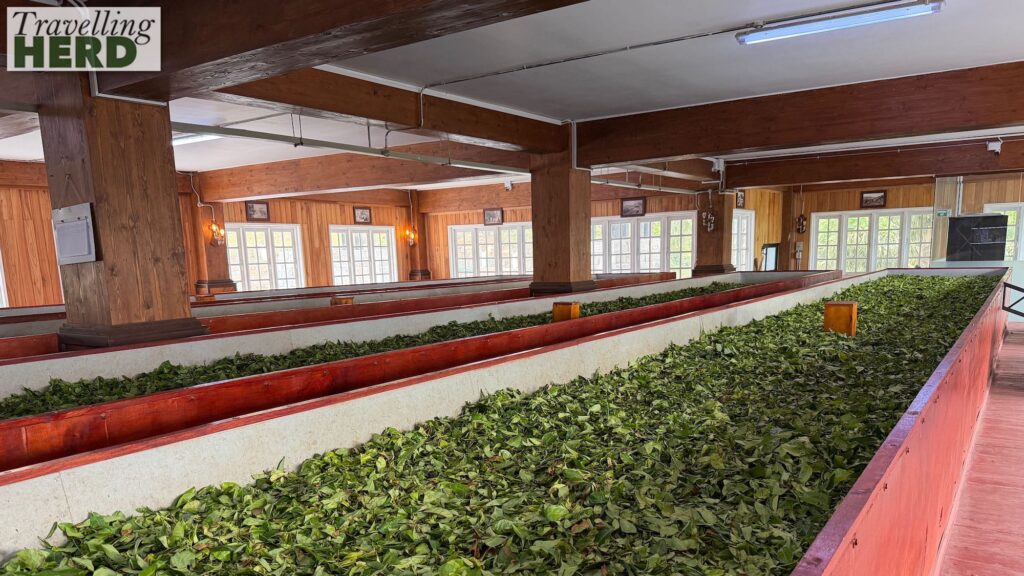
After the leaves have been harvested they undergo a process called withering. This involves spreading them out in the air to reduce the moisture content [see below].
The next stage is rolling the leaves.
This is done with very little pressure and serves to shape the leaves as well as bruising them to release the juices and help to trigger oxidisation. In some instances the tea is then left to ferment for a period in a warm humid environment.
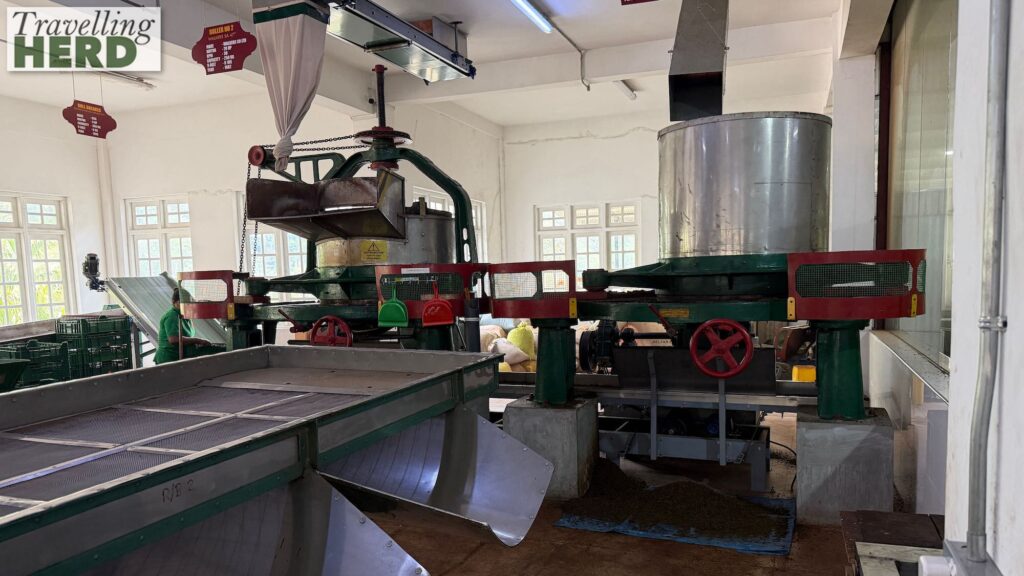
When the bruised leaves are exposed to oxygen, enzymes convert polyphenols in the leaves and this dictates the colour and flavour of the tea. The level of oxidisation is carefully controlled to produce different types of tea: black tea has been fully oxidized, oolong teas are partially oxidised and and white and green teas are hardly oxidised at all.
Once oxidation is complete the leaves are dried.
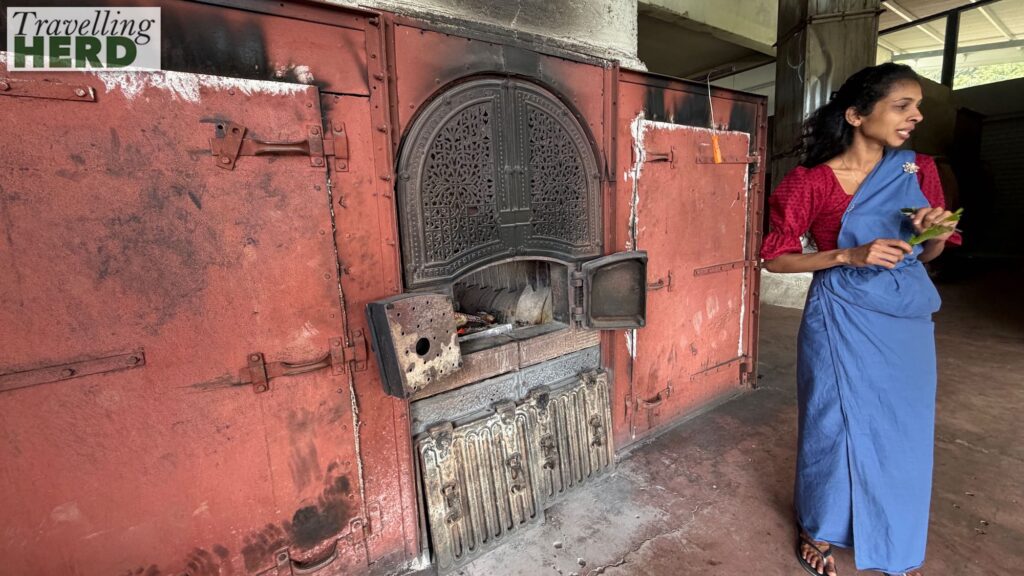
No electricity or gas are used here at the Kingswood Tea Factory: a stove burning only wood provides gentle heat to dry the leaves.
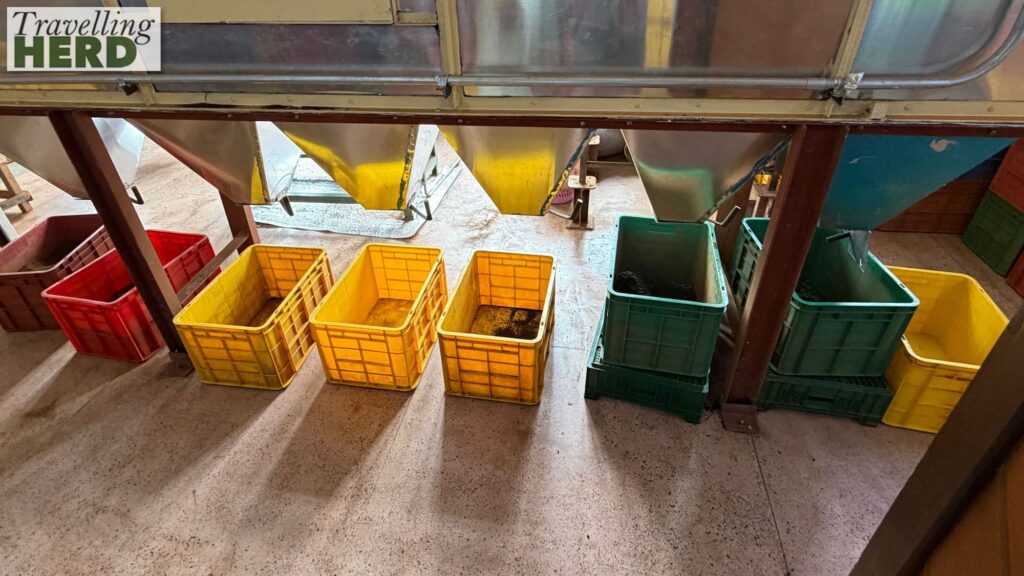
The leaves are then mechanically sorted by size with larger pieces producing tea of higher quality.
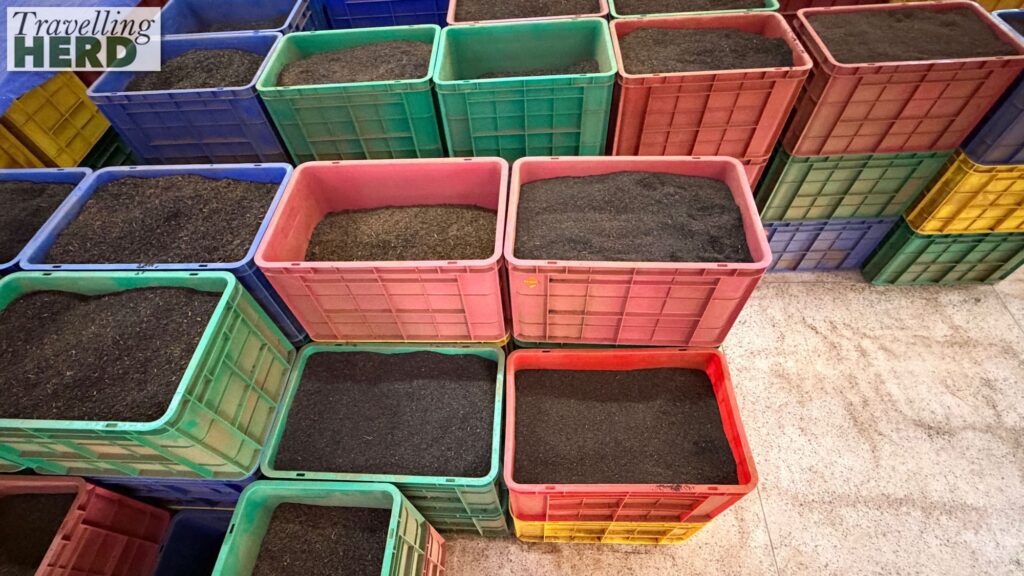
The modern colour-sorting machine [below] can differentiate between 24 different shades of tea leaves.

No trip to a tea factory in Sri Lanka is complete without a tasting session.

After the tour we were served a cup of black tea accompanied by crystallised honey which had the consistency and flavour of fudge. We were told to take small bites and alternate these with sips of tea.

We also walked out to Taylor’s Bridge – a fine metal bridge, painted red in places [see Selfie of the day].
From here we went direct to our hotel, which was uphill and a short tuk tuk ride out of Nuwara Eliya. The Golden Ridge Hotel is a large hotel spread over a hillside site on several levels. As so many places we have visited have been, it seemed quiet and we were told they had had 300 bookings cancelled this month.

We were welcomed with a small plate of white and dark chocolate dipped strawberries [see Dish of the day] which were delicious. This was the first time we had been offered strawberries which are especially suited to the growing conditions in the cooler high-altitude regions of Nuwara Eliya, Ambewela and Ragala.

Video of the day:
Selfie of the day:

Dish of the day:

Route Map:


Discover more from TravellingHerd
Subscribe to get the latest posts sent to your email.