Read this blog: The one where Robert meets an old school friend in Sri Lanka
Saturday 28th February and Sunday 1st March 2026
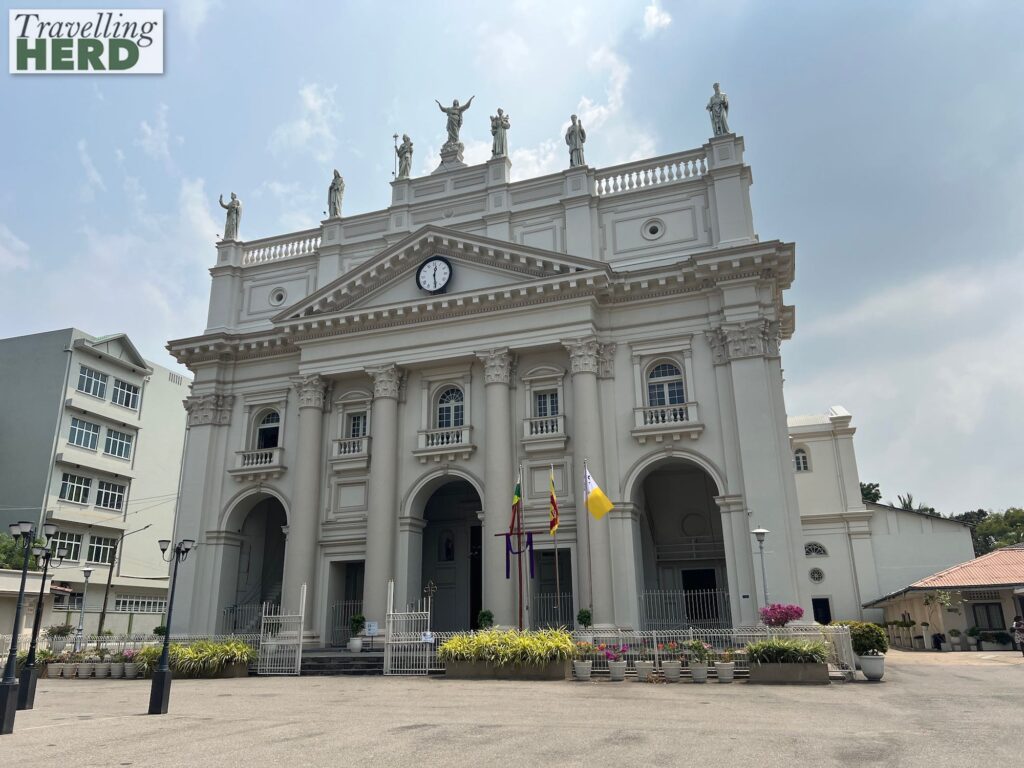
After the excitement of the T20 cricket, we woke early and returned from our overnight hotel, near the stadium, to have breakfast at our central hotel then set off to explore the sights of Colombo, taking a tuk tuk to St Lucia’s Cathedral as the start of our route.
The current building was completed in 1902 and St Lucia’s is the oldest and largest parish cathedral in Sri Lanka. Ionic columns adorn the facade along with seven statues along the skyline.
We took another tuk tuk to the Grand Mosque and from here we decided to walk to. . .
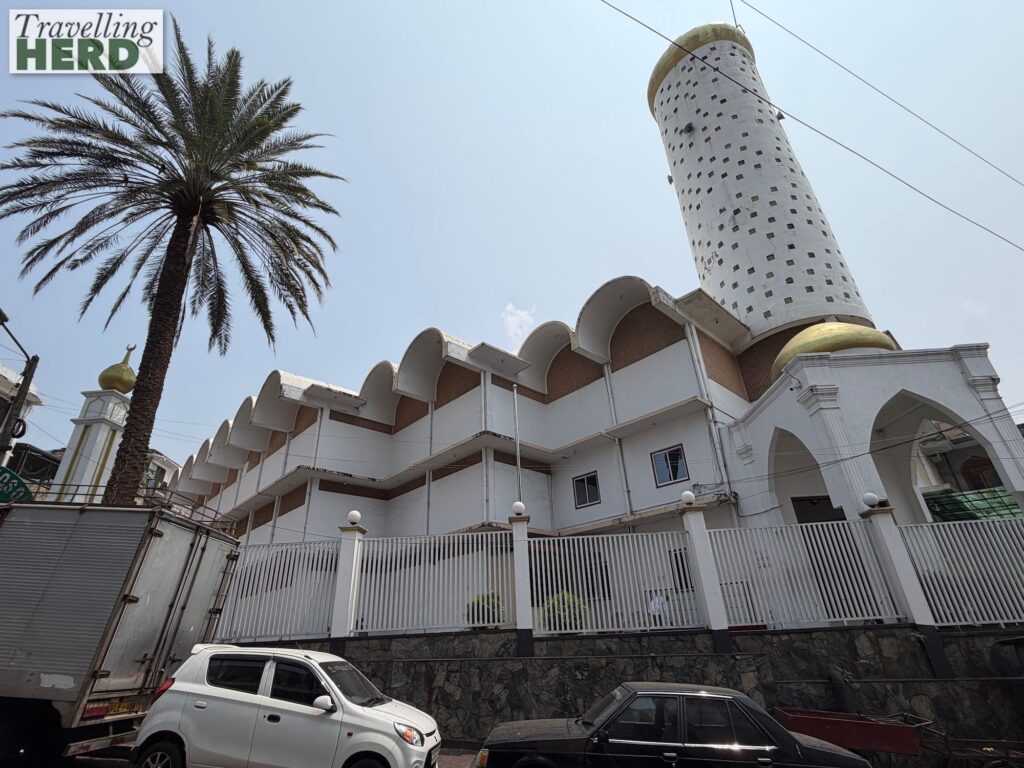
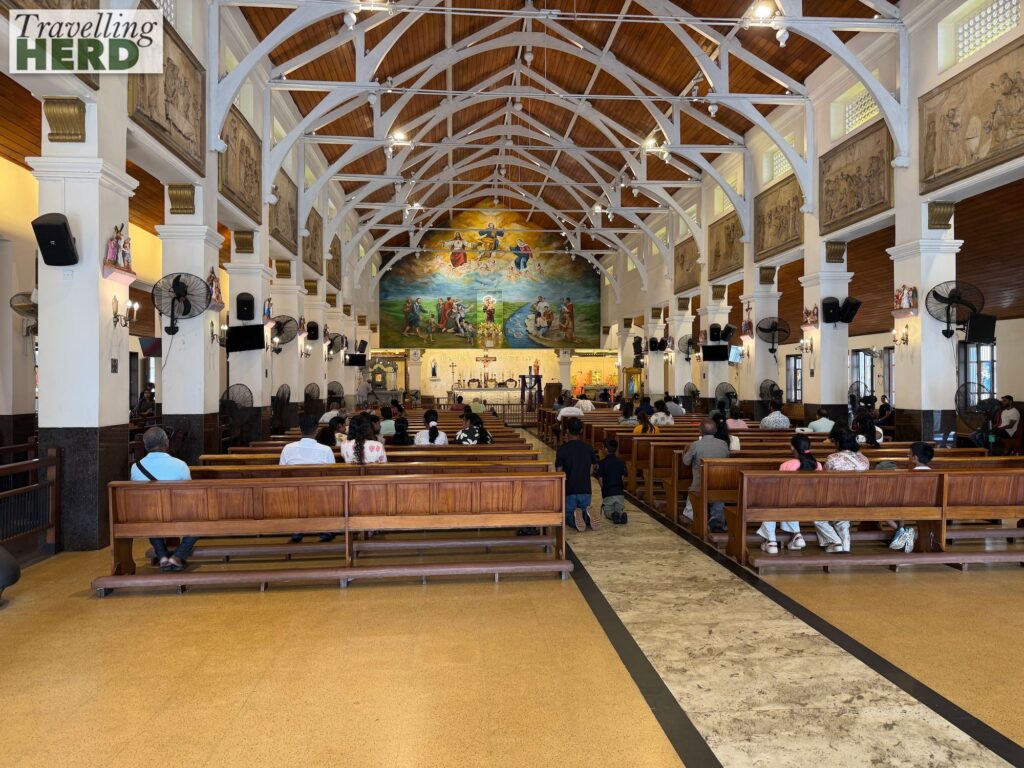
. . . St Anthony’s Shrine which dates from the early Dutch Colonial period when Catholicism was banned and Catholic priests would conduct services in secret. Our research informed us that a reliquary in a glass case at the entrance is deemed sacred because it contains a tiny piece of St. Anthony’s tongue. We were surprised to see a man crawl under the cabinet and subsequently realised that he was demonstrating his reverence by crawling under the relic.
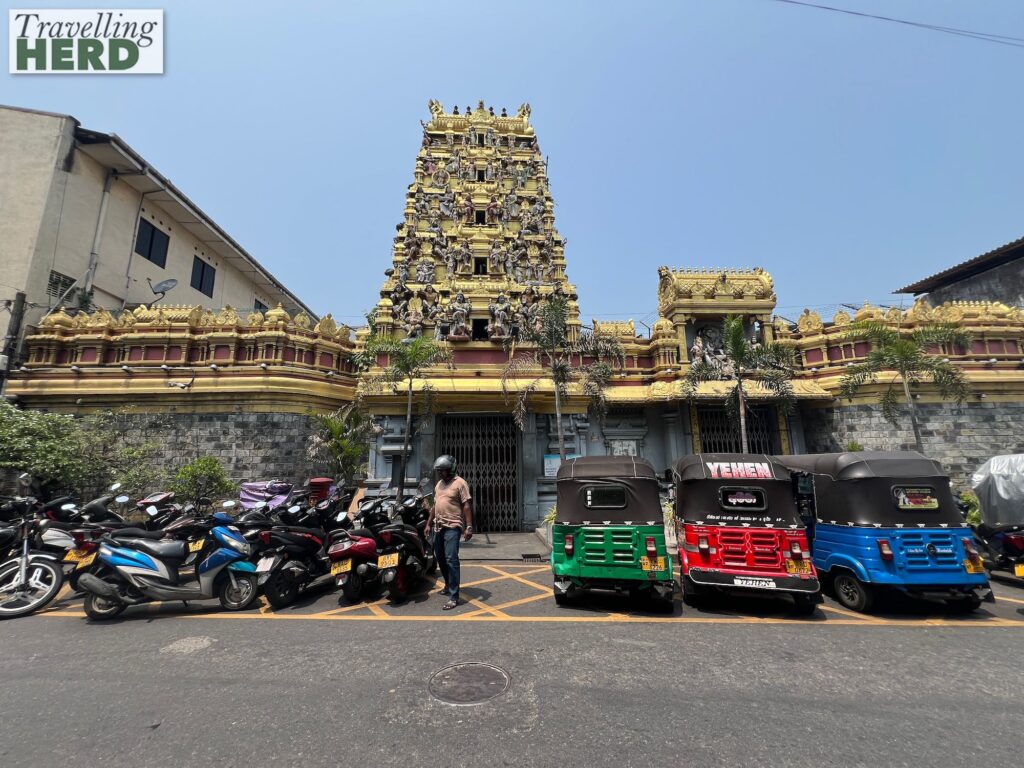
We passed Sri Kailawasanathan Swami Devasthanam, which is the oldest Hindu temple in Colombo and is dedicated to Lord Shiva and the Goddess Parvati. Richly decorated, it is influenced by classic Indian Hindu temple architecture which is apparently unusual in Sri Lanka.
From here we walked to the Old Town Hall Building and Museum.
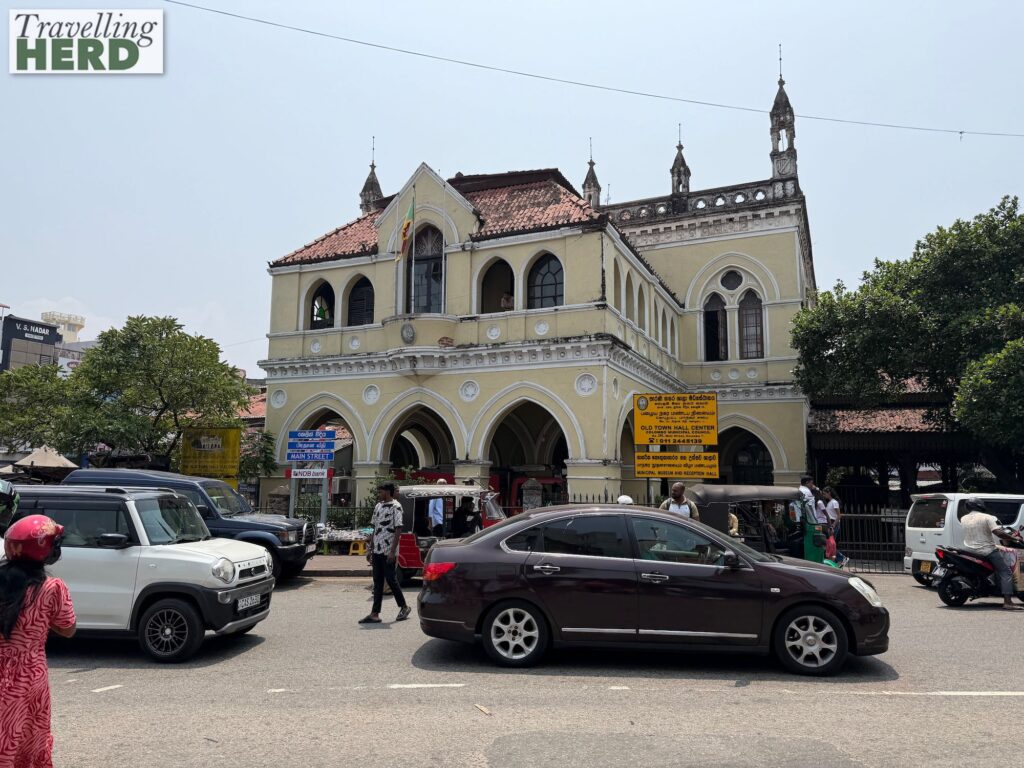
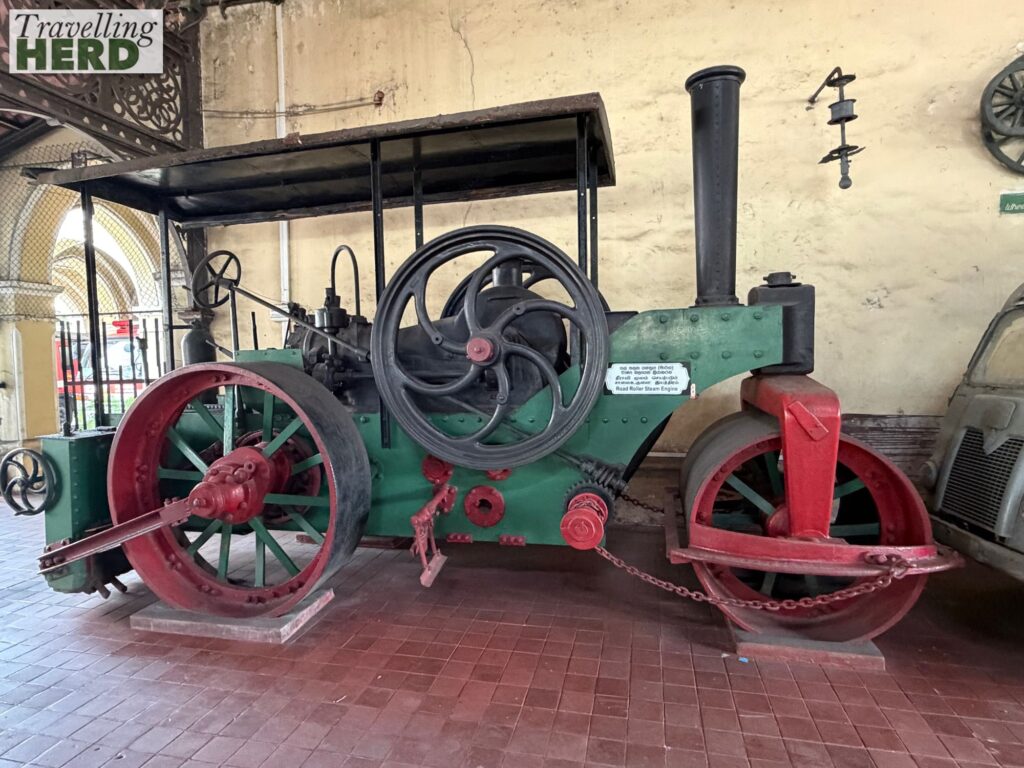
Robert cannot resist a bit of historical engineering particularly if steam is involved and enjoyed the exhibits in the museum, especially as many of the trains originally planned for this trip would not be running.
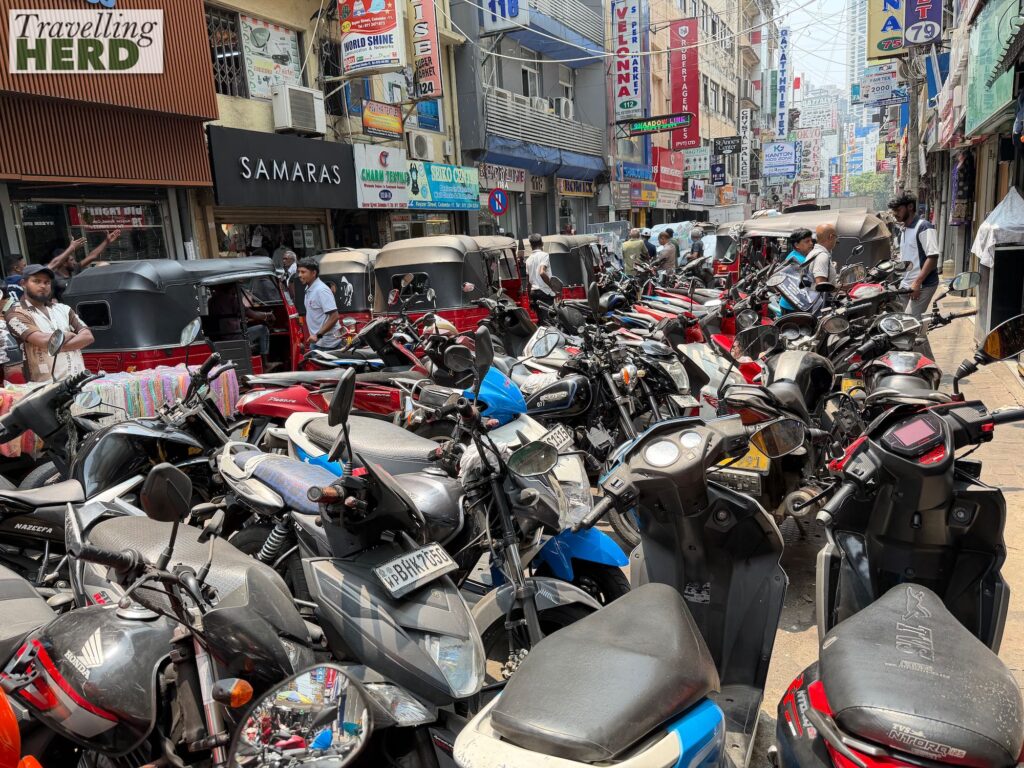
The nearby Pettah neighbourhood is home to a bustling market and was busier and louder than other parts of the capital we had visited. The number of parked mopeds made it seem more like Vietnam, although they were confined to the road rather than the pavements.
In the heart of Pettah we passed the Jami-ul-Alfar Mosque which is often referred to as the Red Mosque for obvious reasons [see feature photo].
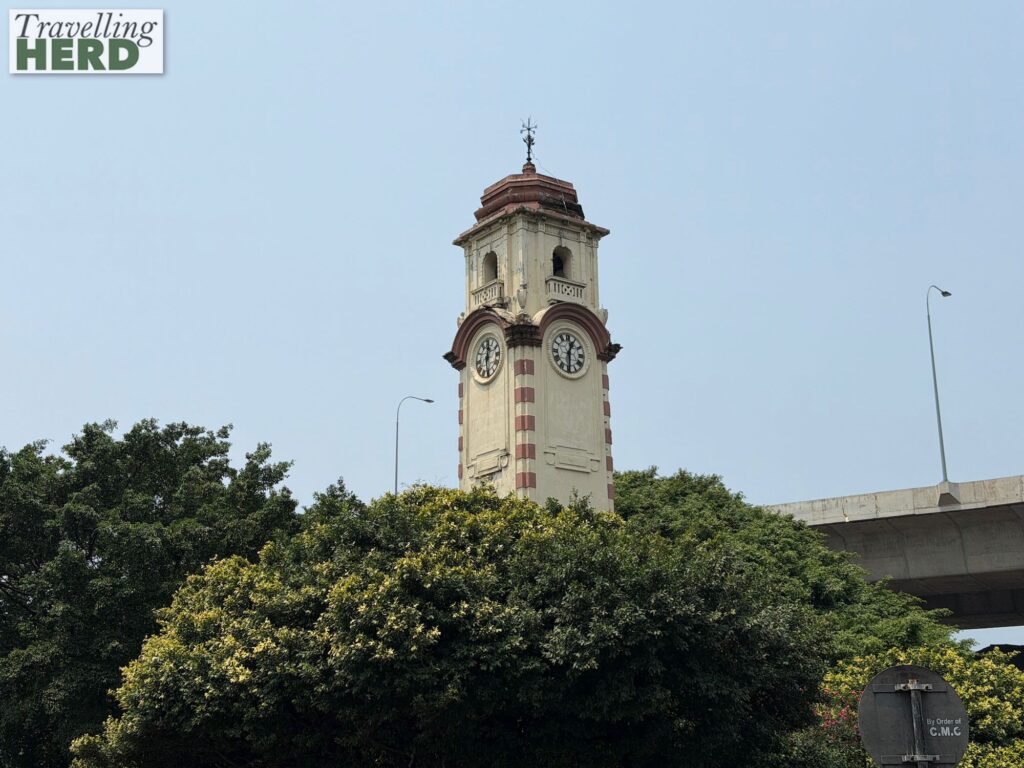
The Khan Clock Tower is said to mark the entrance to Pettah Market and was built in the early 1920s by the family of Framjee Bhikhajee Khan. Originally from Mumbai [Bombay] the family owned the Colombo Oil Mills as well as other local businesses.
In our case it marked the exit of the Pettah Market as we walked out of the hustle and bustle on towards York Street.
The striking Cargills Building was built between 1902 and 1906 as a high-end colonial department store and some sources cite it as being the oldest one in Asia.
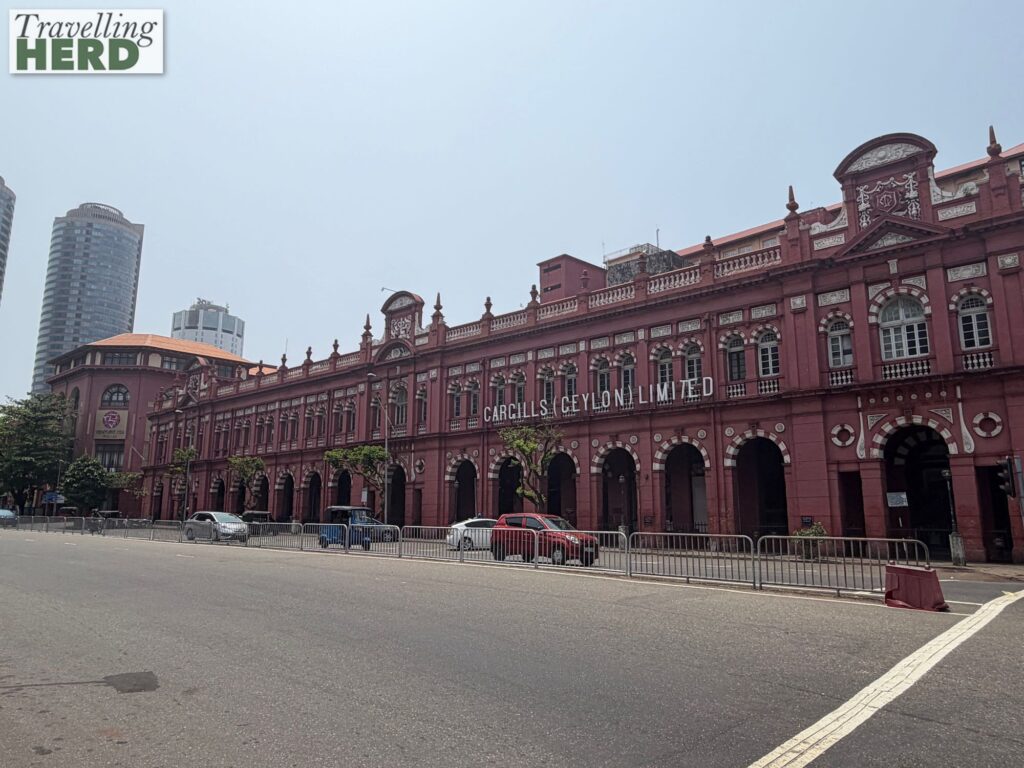
Constructed using red brick with distinctive white decorative details and arches, Cargills has now clearly lost some of its prestige although the surviving signage is indicative of its former grandeur.
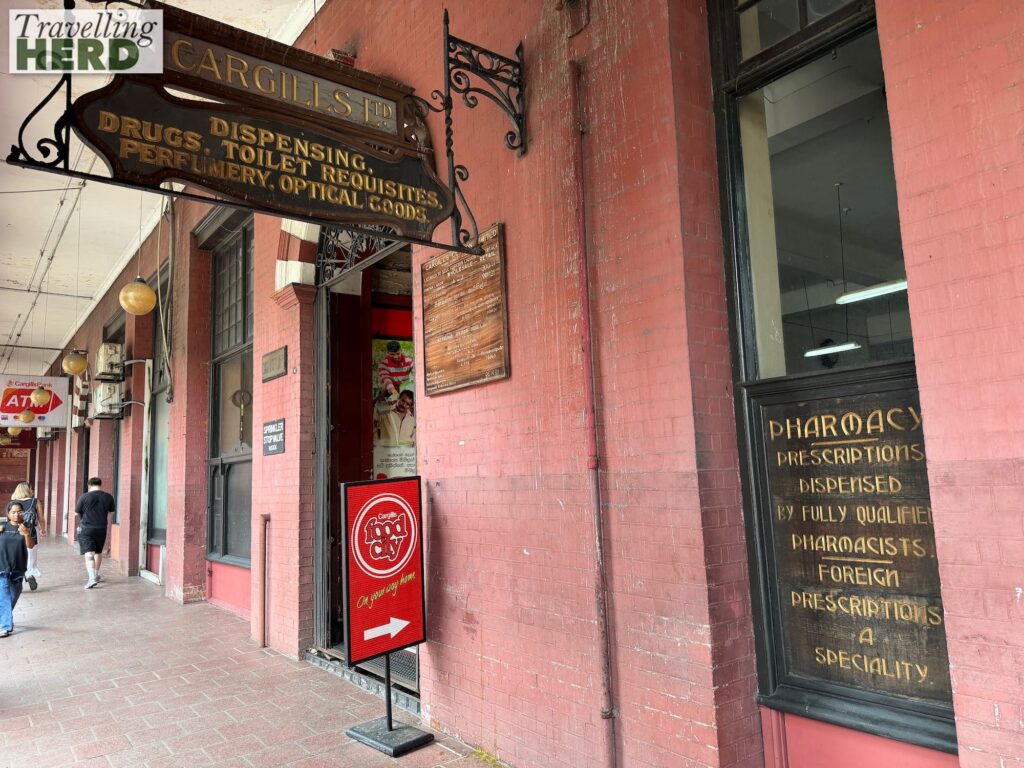
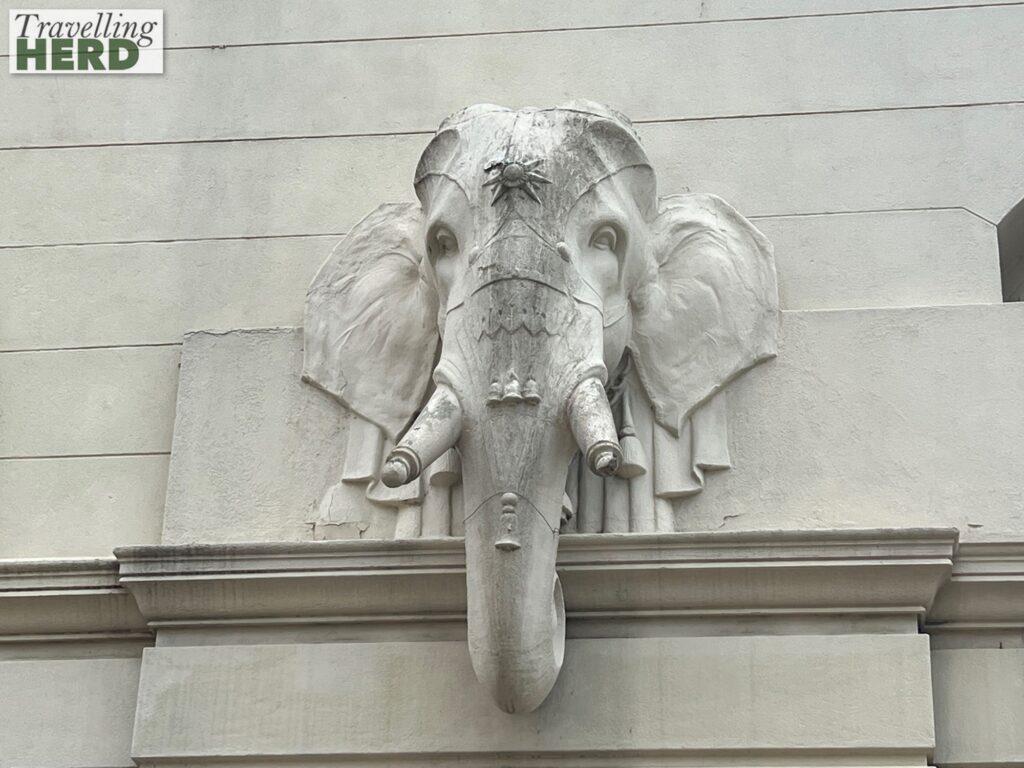
Cargills does however now operate as a supermarket chain with outlets around the city. Our walk took us past the headquarters of the Commercial Bank of Ceylon and Matilda was quite taken with the elephant sculptures adorning the building.
Robert had discovered by chance that an ex-school form-mate was also going to be in Colombo at the same time and we arranged to meet him and his colleague that evening. They were undertaking some outreach medical mentoring, training and assessment. Robert and Wije had about eleven years’ of news to catch up on plus quite a bit of reminiscing about school days whilst a Jazz and Arts Festival carried on around them [see Video of the day]. It was such a pleasure to meet up.

The following morning we set off to see some more sights, taking a tuk tuk to the Isipathanaramaya Temple, one of the oldest Buddhist temples in Sri Lanka. It was built in 1916 by a wealthy merchant, in memory of his only son, Henry, who was executed by the British for alleged incitement of race riots. Tragically, the accusations were subsequently proven to be false.

From there we walked to the Asokaramaya Buddhist Temple which was built in the 1870s to provide shelter for the persecuted disciples of Aluthgama Sangharatne who came to hear him preach.
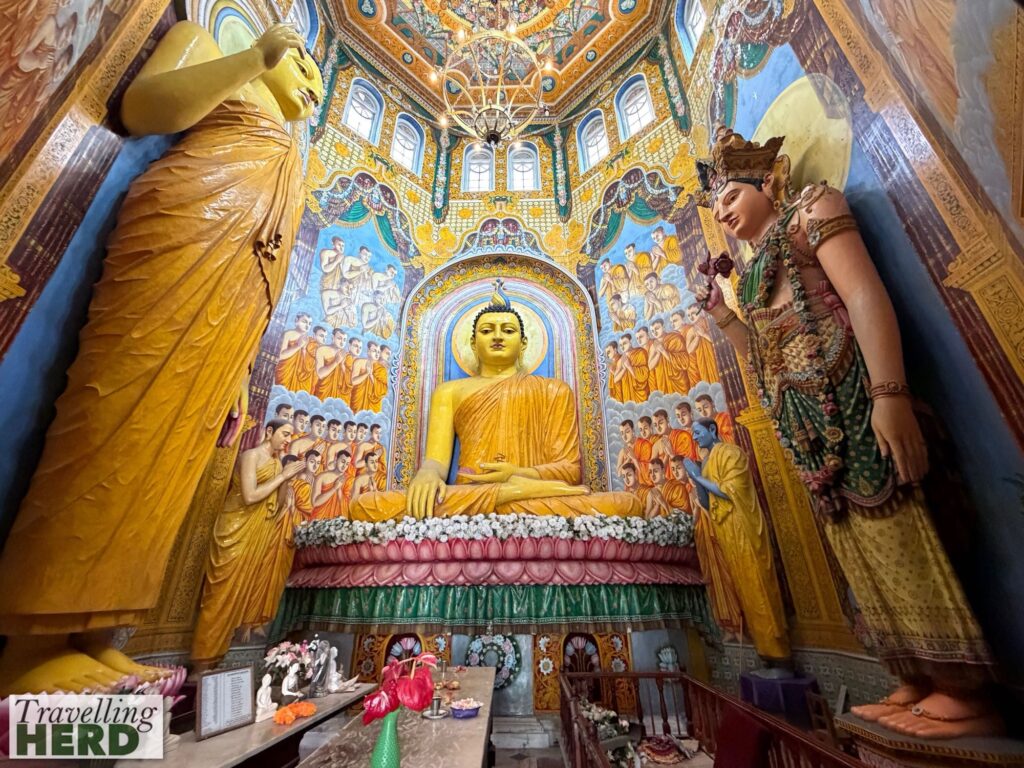
By contrast, after the opulent decoration of these temples, we went to the Independence Memorial Hall which was built to celebrate the country’s declaration of independence on the 4th February 1948 and is far more austere.

Unfortunately, even though it was built in the middle of the last century it needs some restoration and certain stairs and areas were cordoned off,
As we walked through Independence Square Park, we noticed a colony of bats, some with young, in one of the trees. Matilda also enjoyed the other collective nouns for bats which include cauldron, cloud and camp.
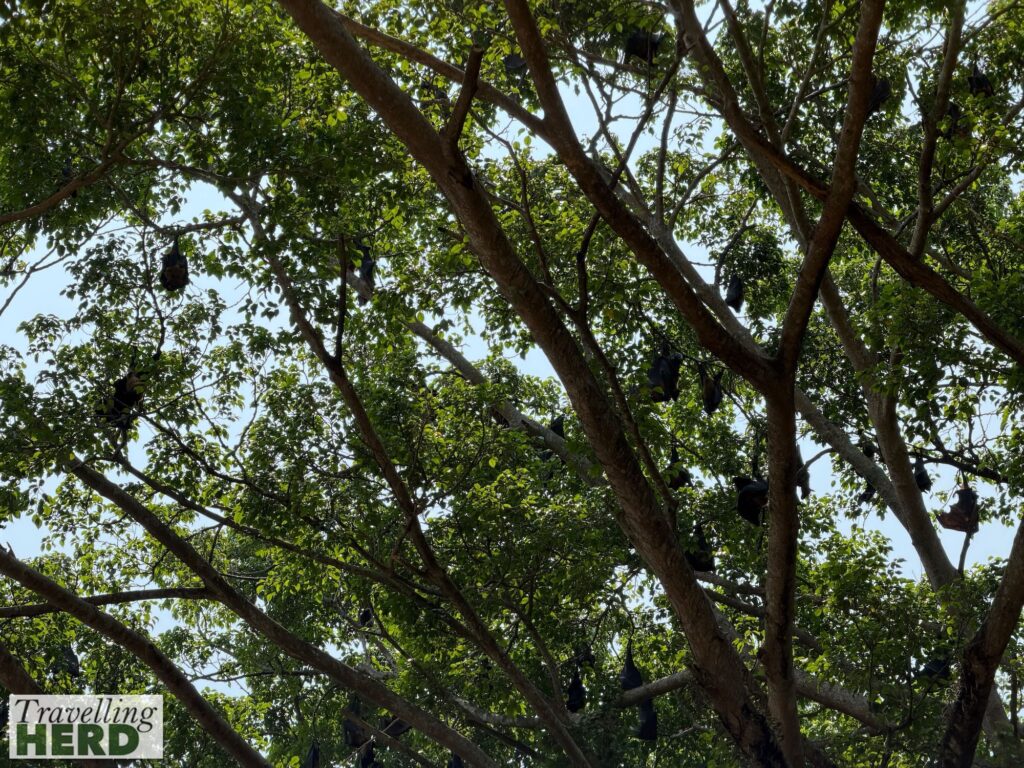
The Colombo Independence Square Park is sometimes referred to as Independence Square Jogging Park but we felt anyone would be mad to go jogging in this heat.
The Colombo National Museum is the largest museum in the country. Founded in 1877, it now houses the Sri Lankan Crown Jewels including the crown, throne, scepter and sword of state of the Kingdom of Kandy which were used by the royal family of Ceylon from 1948 to 1972.
The Colombo National Museum and National Museum of Natural History are adjacent to each other and we opted to visit both but the Natural History Museum seemed to be rather old-fashioned with stuffed exhibits, many of which had seen better days. Colombo National Museum by contrast was well-laid out and informative and we were glad we had visited before we went to such historical sites as Anuradhapura and Polonnaruwa.

The nearby Nelum Pokuna – Mahinda Rajapakse Theatre [to give it its full title] lives up to its name even when viewed from the outside as it translates as lotus pond. It comprises two performance venues: the main auditorium and an open air amphitheatre.

The Town Hall is the product of an international architectural competition held in 1922 by the Colombo Municipal Council. Out of 32 submissions, the winning design was drawn by S. J. Edwards.

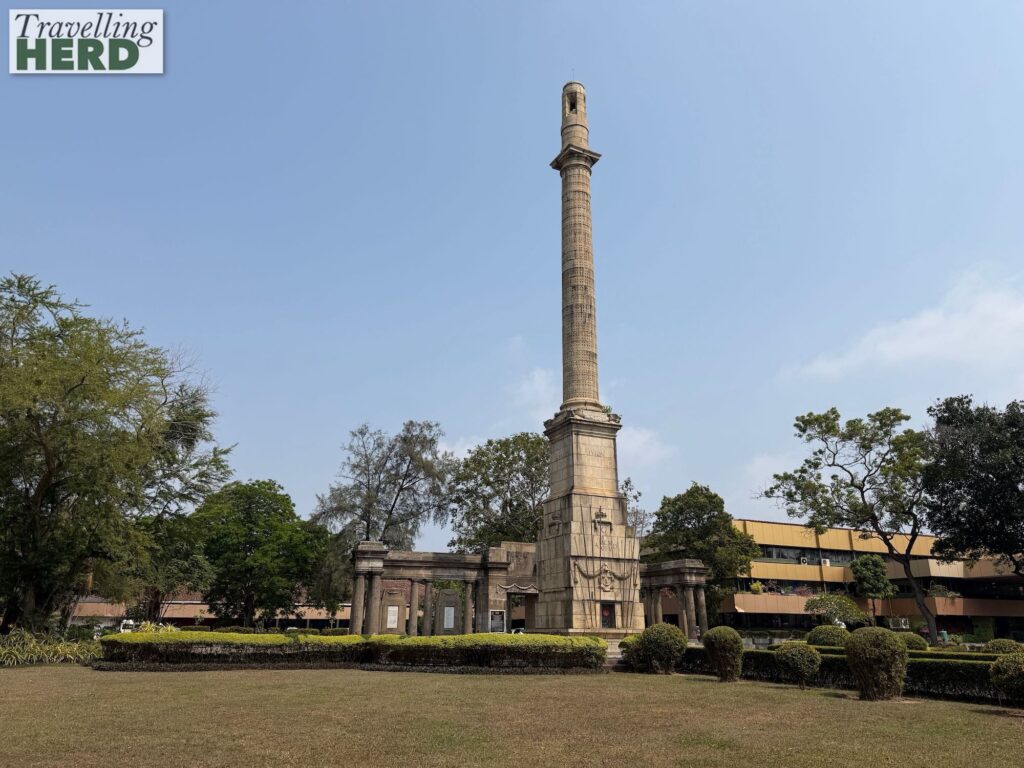
The Cenotaph War Memorial in Viharamahadevi Park, commemorates the military personnel from Ceylon killed in action during the two World Wars. It was designed by the architect Sir Edwin Landseer Lutyens who designed the Cenotaph in London as well as being involved in the Liverpool Metropolitan Catholic Cathedral.
We walked on to the Gangaramaya Temple where we were charged LKR500 entry each which is equivalent to £1.25 per person. This covers entry to both the Gangaramaya and Seema Malaka Temples. We were invited to place our shoes in a basket by the entrance and we realised that foreigners used the baskets whilst Sri Lankans used the shoe racks by the entrance.
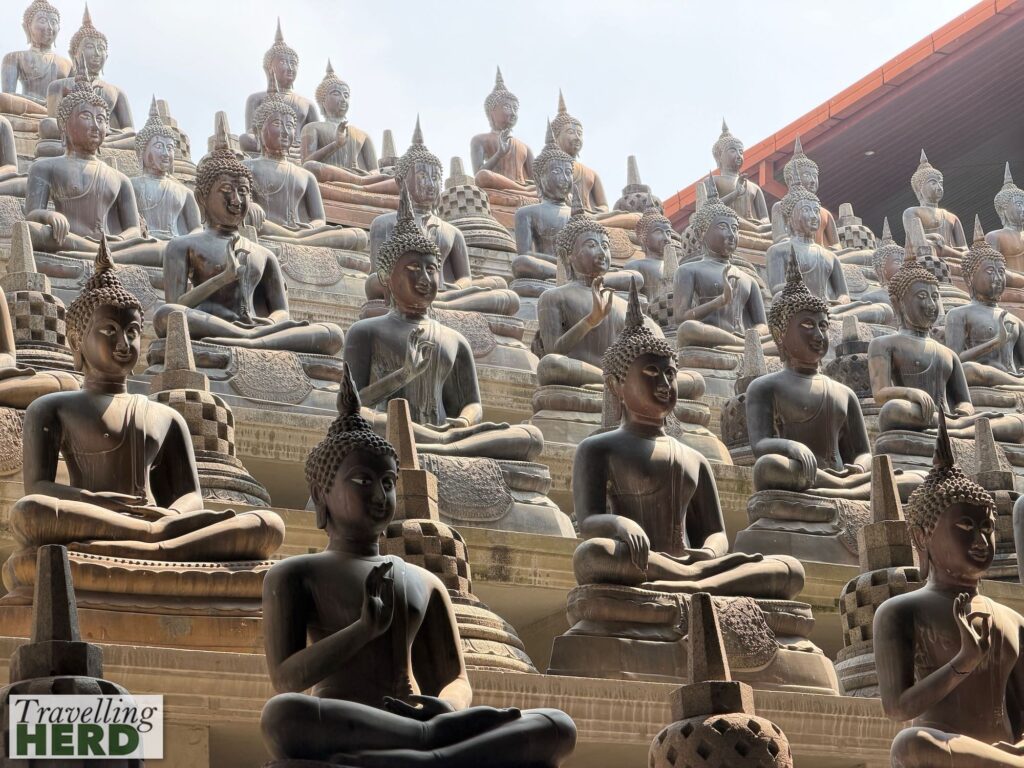
The tiers of Buddha statues were impressive but we were slightly bemused by the backrooms which seemed to be full of donated and devotional artefacts which reminded us of a flea market in the UK.
Nearby is the Seema Malaka Temple, which literally means “the floating temple”. Designed by the renowned Sri Lankan architect Geoffrey Bawa, it is built on platforms above Beira Lake and compared to the Gangaramaya Temple it is indeed more simple and peaceful. We paid an entry fee again and Matilda realised that we had been given identical tickets and we then read the small print which said the price covered both sites so we went back to the kiosk to get our second fee refunded.
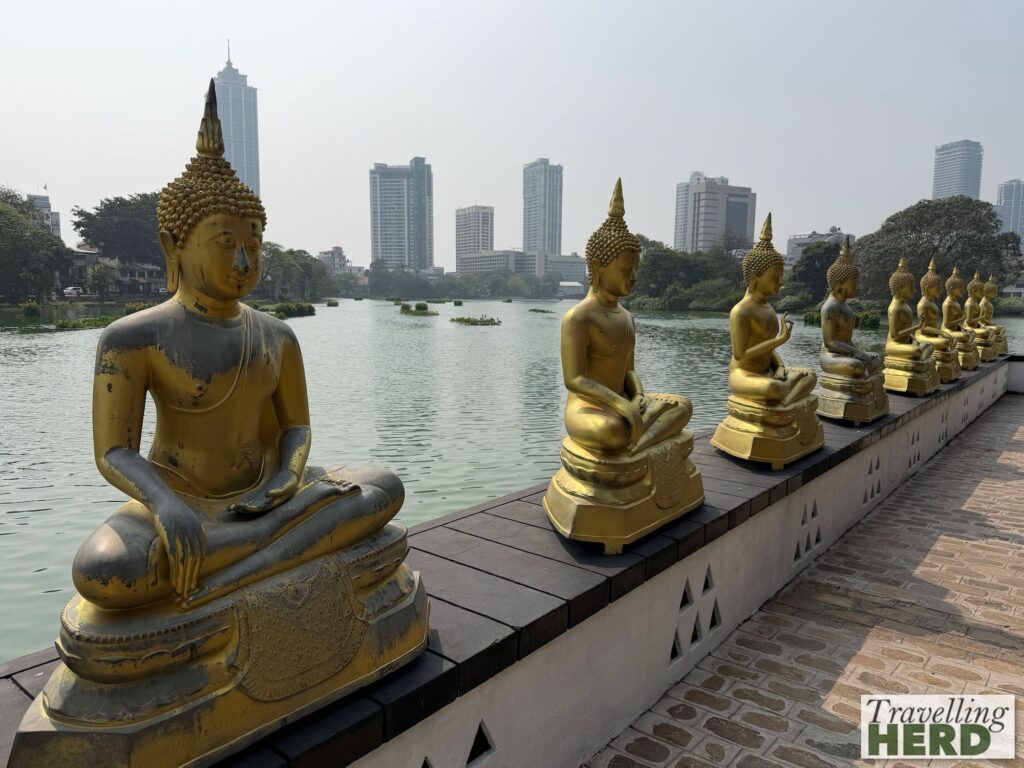
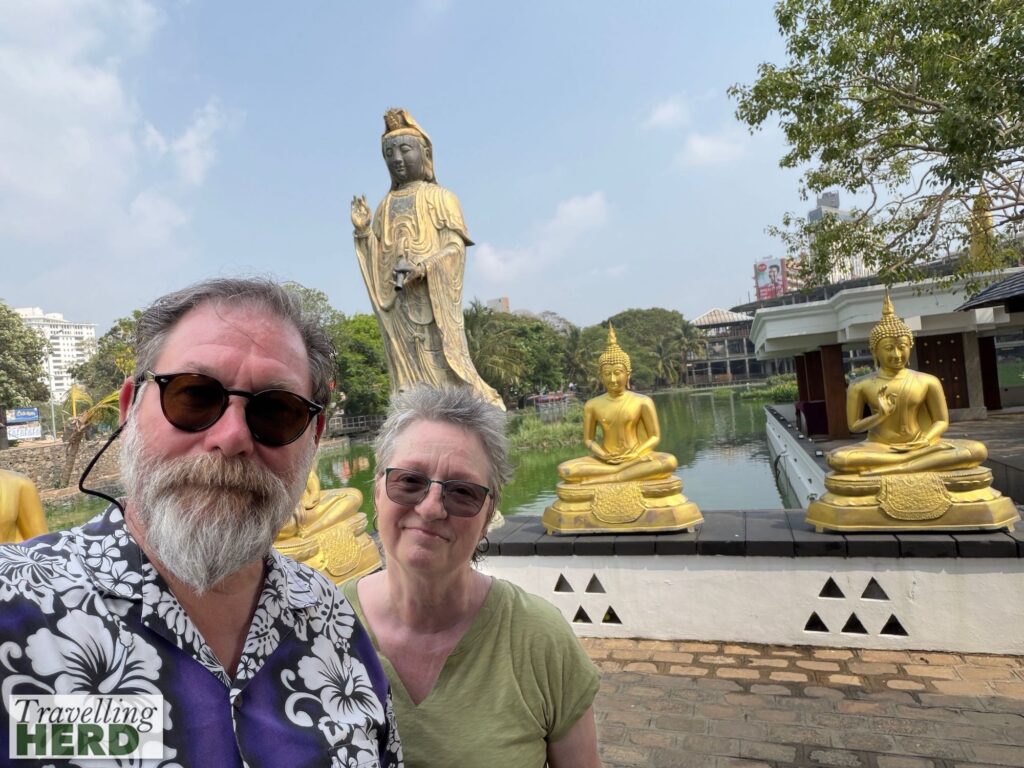
Having removed our shoes, we noticed that we were leaving wet footprints on the ground. Matilda realised that the mats had been ‘watered’ and when we walked onto areas in full sun we realised this was essential to prevent bare feet from burning. See also Selfie of the day.
The Beira Lake was very green and there were pelicans who were unperturbed by the tourists.

After her trip to Vienna with Ruth, Matilda has learnt a lot from her daughter about finding a good place to eat out on holiday. Her research told her that the Ministry of Crab was ‘the best restaurant in Sri Lanka and one of Colombo’s most iconic dining experiences’.
Situated in the Old Dutch Hospital we discovered it was a two minute walk from our hotel and went to book. Robert was also pleased to discover that it was founded by Sri Lankan cricketers Mahela Jayawardene and Kumar Sangakkara (in Robert’s view a GOAT). We discovered the restaurant would be closed on Monday for the full moon and were offered only two available times on Sunday. We booked a table for 20:30.
There were display boards with illuminated 3D representations of the different sizes of crab available and the lights were turned off when a size was sold out. The largest size was crabzilla [2kg]. Larger than life photos of Jayawardene and Sangakkara looked down on us as we ate.
The Ministry of Crab promotes itself as a ‘showcase for the country’s famous lagoon crabs through simple, high-quality cooking’. We opted for a prawn starter rather than crab and chose the second smallest which was described as regular [200g-250g], though we both had a crab dish to follow. Bibs were provided as this can be a messy business. We were shocked by the size of the crustacean served to us [see Dish of the day with hand for scale].
The staff were welcoming and helpful and although more expensive than some other places, the prices were not outrageous: we would highly recommend eating here.

Video of the day:
Selfie of the day:
Dish of the day:

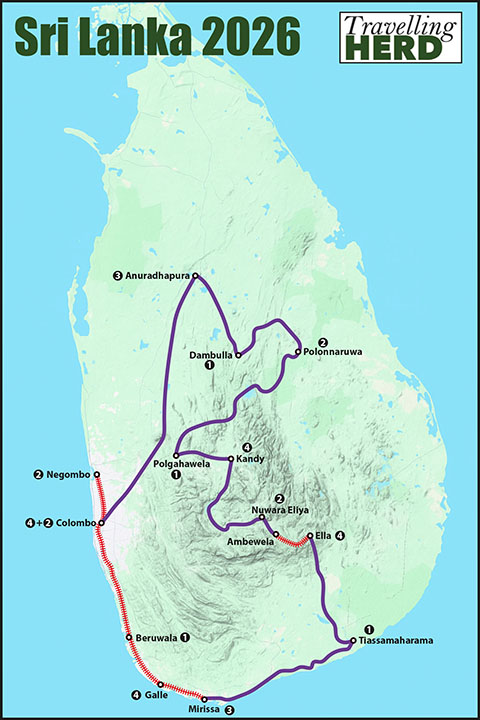
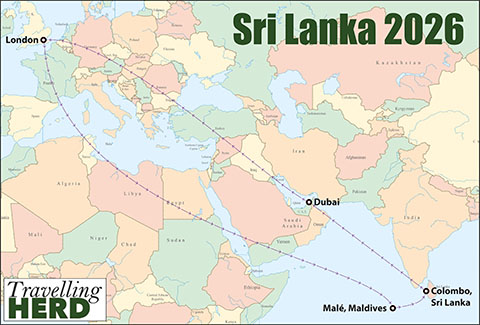
Route Map:
Discover more from TravellingHerd
Subscribe to get the latest posts sent to your email.