Read this blog: The one where we are confused by currency rates
Thursday 12th March 2026
We decided to book a car to take us to some of the more out-lying sites and asked the hotel to arrange this while we were having brreakfast. The man on reception came back to us and quoted a price. We both put this into the currency converter in the calculator on our iPhones and came out with very different numbers. Robert initially thought it would cost the equivalent of about £15 whereas Matilda’s converted figure was closer to £40. Robert agreed to book the car and we noted the different conversion rates afterwards but we are now wary of believing the iPhone currency conversion rates. The actual price was closer to the figure Matilda had seen.
When Robert went to reception to pay for the car in advance, he also collected our laundry and was told that they had never done so much laundry for a guest ever before. Robert explained our system of travelling light with about ten days’ worth of clothes and getting them washed when we have a few days in the same hotel.
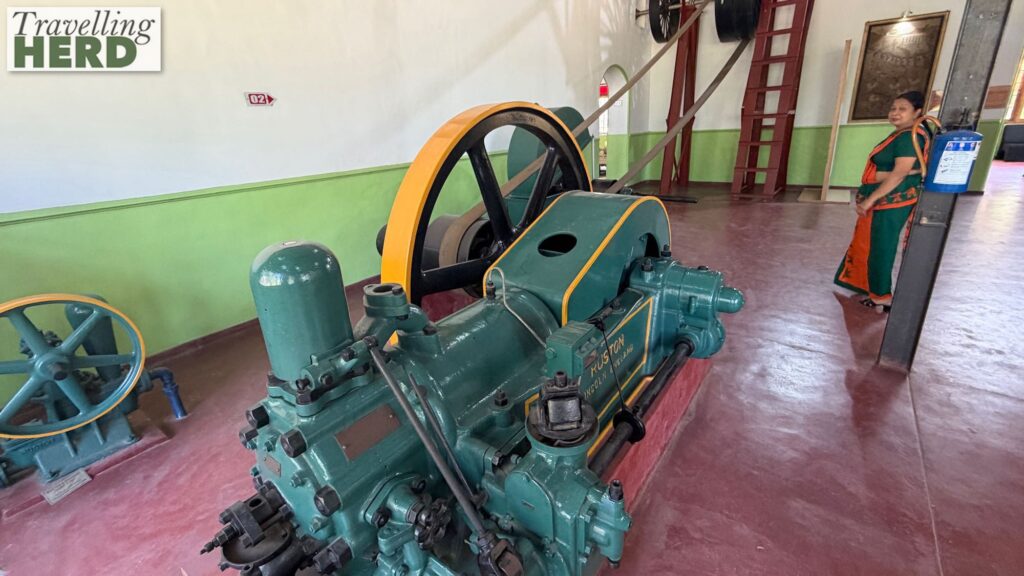
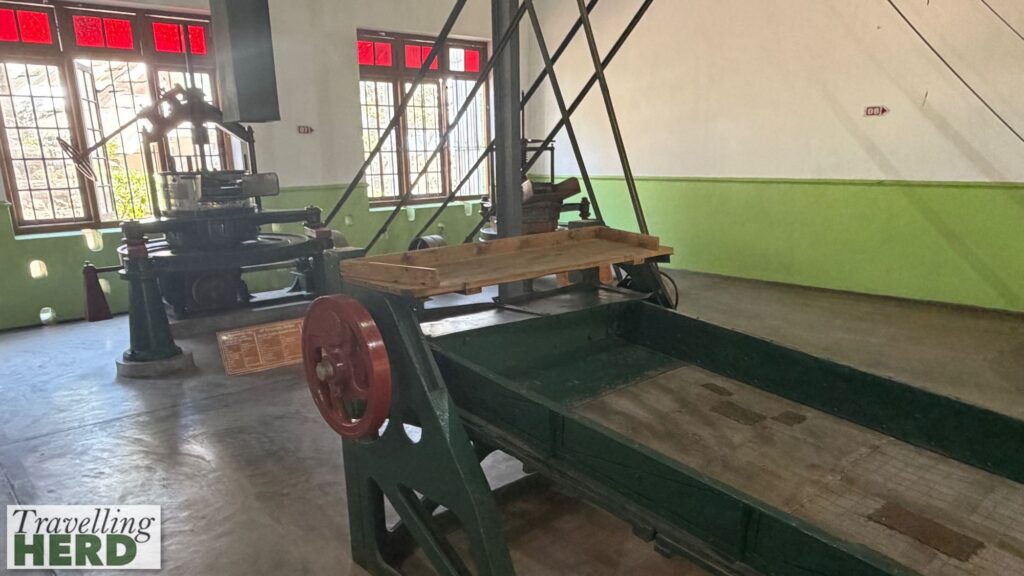
Our first stop in the car was the Ceylon Tea Museum which is housed in a former four storey tea factory on the Hantane Estate. The building dates from 1925 and the exhibits comprise nineteenth century machinery for processing tea including drying furnaces, rollers, dryers and sorters. There is also a small working model of the tea factory [see Video of the day].
Drinking tea originated in China when leaves from the plant Camellia sinensis fell into water the Emperor Shen Nung was boiling. Clearly unperturbed by the possibility of poisoning, the emperor drank the mixture and declared it to be both calming and invigorating.
A Scotsman named James Taylor is credited with having introduced tea to Sri Lanka. He was just 17 when he first came to Ceylon in 1852 and went to stay at the Loolecondera Estate – at that time a coffee plantation – where he eventually rose to become manager.
James Taylor visited India in 1866 to learn about cultivating tea and planted 21 acres of tea at the Loolecondera Estate in 1867. Shortly afterwards the country suffered from an epidemic of coffee rust disease and the crops were largely destroyed. Tea plants were, however, immune to this blight and estates across the region swiftly made the transition to growing tea.
Ceylon Tea became the basis for English Breakfast Tea blends and was soon deemed to be the world’s favourite beverage. Matilda really wants to like tea grown in Sri Lanka but unfortunately she finds it a bit too strong. A helpful guide at the Ceylon Tea Museum suggested that she try Flowery Broken Orange Pekoe Fanning [FBOPF] tea for a lighter drink.
Surprisingly, until as recently as 1971, 80% of the tea estates in Sri Lanka were owned and managed by the British.
In keeping with Emperor Shen Nung’s pronouncement, tea drinking is said to confer a range of health benefits including managing high blood pressure, reducing the risk of cancer, reducing the risk of dementia, relieving stress and improving dental health.

Having sampled some Ceylon tea, we continued on to the Royal Botanic Gardens in Peradeniya which is famous for its palm avenues among other things.
The double coconut palm or Lodoicea maldivica is also sometimes called the Sea Coconut. Originating in the Seychelles, the fruit floated ashore in the Maldives when they were believed to be the fruit of a deep sea plant. This plant is slow to reproduce. One nut or seed weighs anything between 10 and 20 kg and takes from five to eight years to mature. It then takes between one and two years to germinate. The seed itself resembles two coconuts joined together.
This rare palm was introduced to Peradeniya Botanic Gardens in 1850 and is described in the leaflet as ‘the most remarkable palm in the garden’ although the photo does not really do it justice.

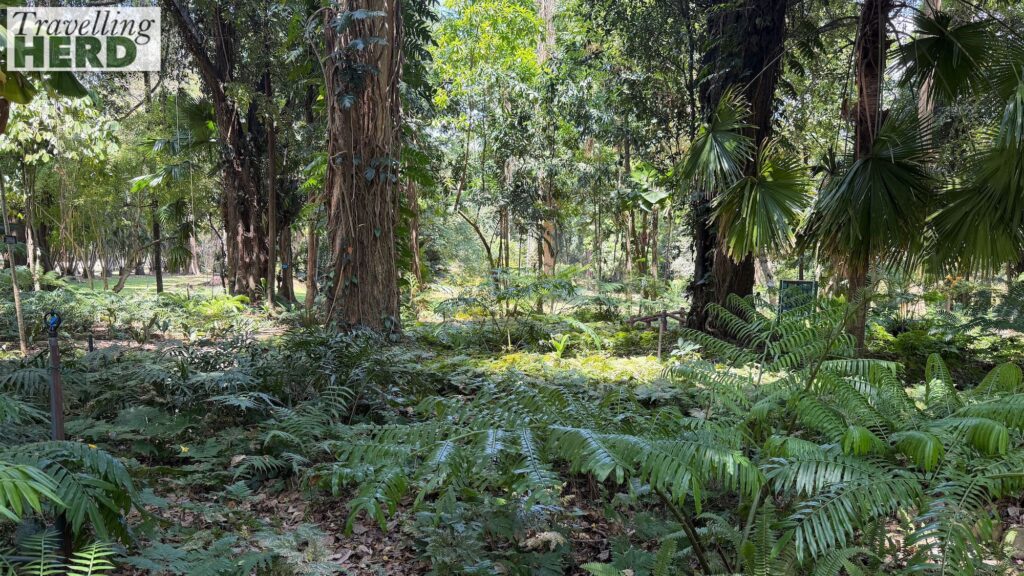
The fern garden provided some welcome shade.
At approximately 50 feet tall – equivalent to a five storey building – the Cabbage Palm Avenue is truly impressive.

The palmyra palm is also sometimes referred to as a fan palm and the leaves are often used for thatching.

The Conservatory is constructed from glass and steel and has a water cooled environment.

This is suitable for the tropical forest plants inside.

A short walk from here, the pergola leads to . . .
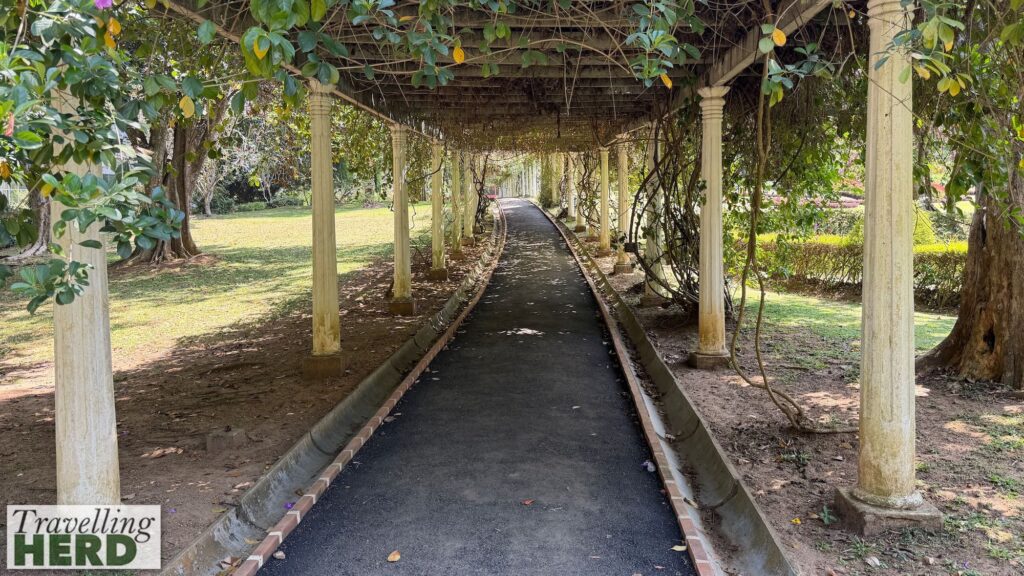
. . . the Orchid House with over 300 varieties.

Facing the Orchid House is the neat and orderly Flower Garden planted with colourful Coleus varieties when we visited.

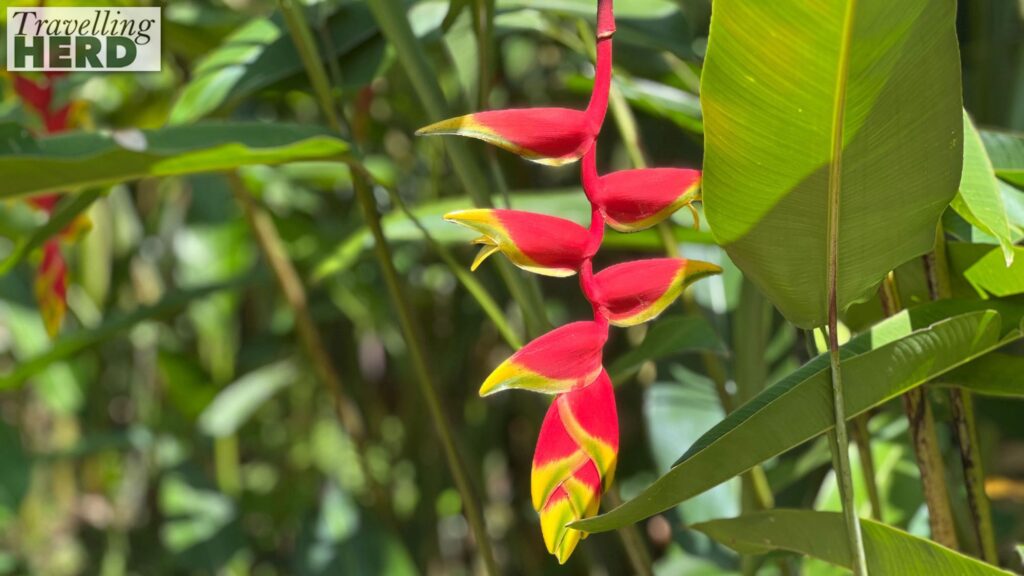
The hanging lobster claw plant heliconia rostrata grows up to 12 feet high and attracts hummingbirds although we didn’t see any.
Having enjoyed the gardens we then started on what is known as the Three Temples Loop which comprises the Gadaladeniya, Lankathilake and Embekke temples. Some guide books encourage you to walk between them but as it is a steep four mile route we were glad to be in a car.
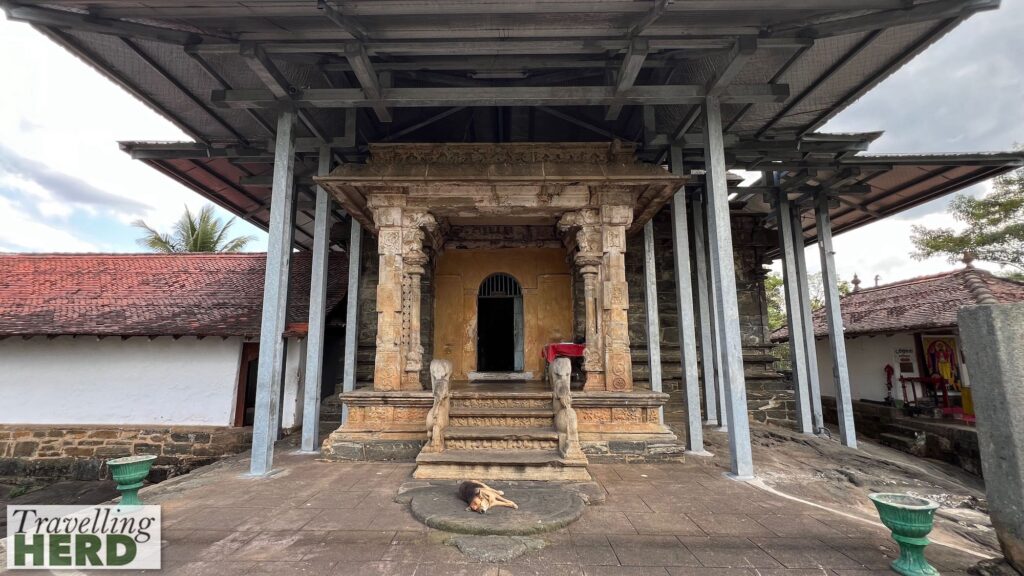
Gadaladeniya Viharaya was built in 1344 on top of a rock. The stone temple is decorated with drummers and dancers whilst inside a serene golden Buddha is seated under a ceremonial painted arch.

Two small elephants guard the steps to the entrance.

From here we went to the Lankathilaka Temple. This is both a Buddhist and a Hindu temple.

The Lankathilaka Temple was built on Panhalgala Rock during the reign of King Bhuvanekabahu IV who ruled from 1341 to 1351 CE. Originally four storeys and 80 feet high today only three storeys remain.
A Hindu temple, built for the Queen surrounds three sides of a central Buddhist temple used by the King.
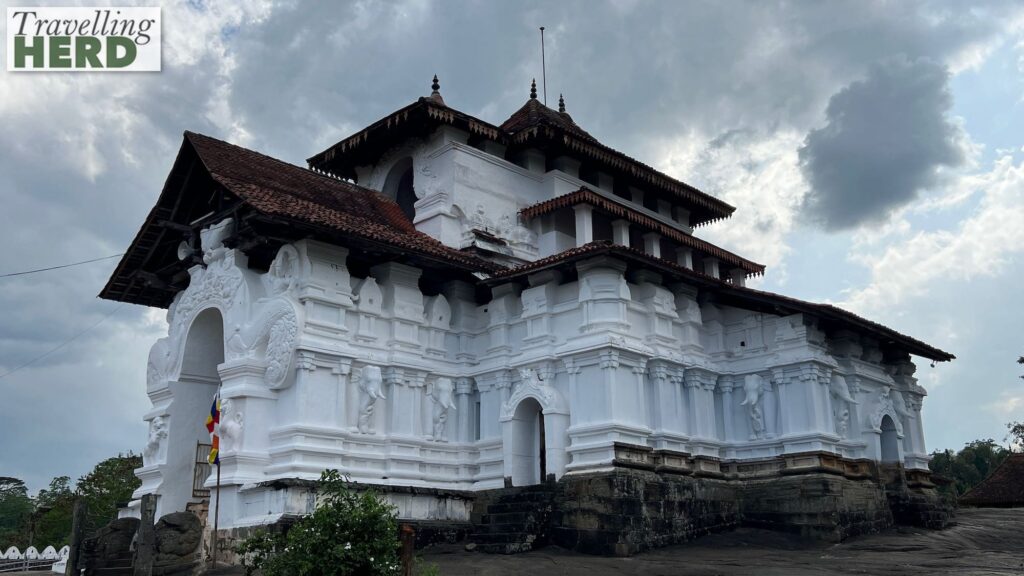
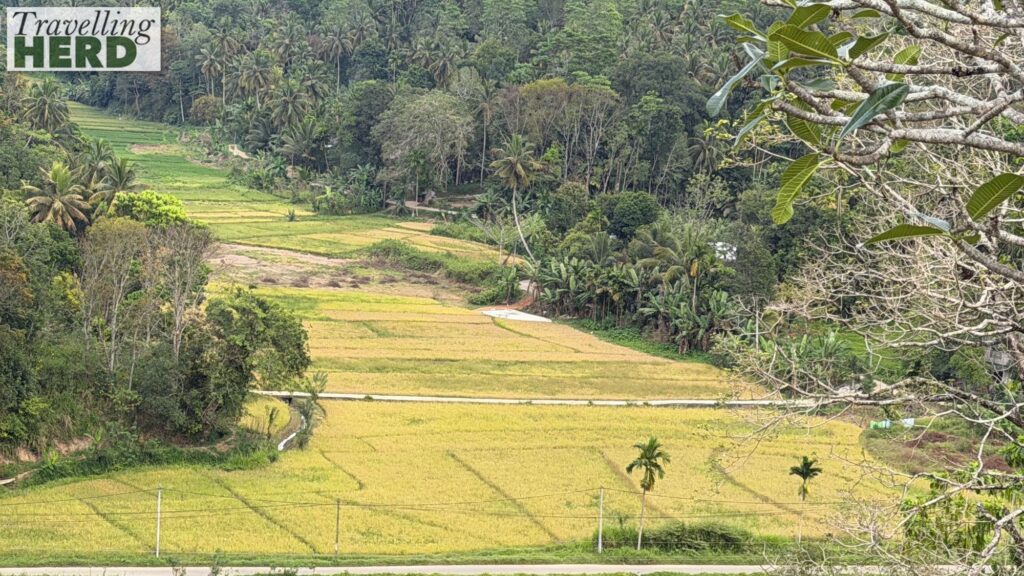
When we visited both temples were locked and there was a custodian for each. First the keeper of the keys to the Buddhist temple took our entrance fee and kindly said we could keep our shoes on to walk across the scorching hot rock. He himself went barefoot and we could see from the way he walked that it was very hot indeed. We walked to the rear of the site where there were views across paddy fields and we removed our shoes before entering the temple itself.
Next the keeper of the keys to the Hindu side let us in and invited us behind a curtain to see the statues of the devales – the gods who protect the temple.

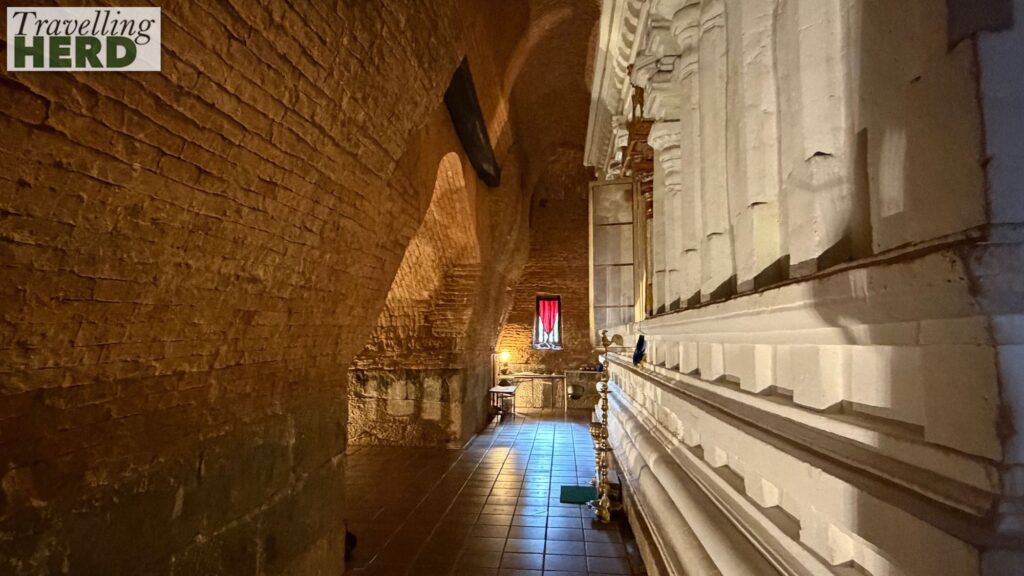
Within the Lankathilaka Temple the white Buddhist temple is surrounded by the brick Hindu temple which has four metre thick walls.
We decided this was the highlight of the Three Temples Loop and asked to return to Kandy where we discovered the WorldSpice KCC food hall. Here you are given a smart card to swipe to gain access to the food hall. There is a choice of Italian, Thai, Chinese and Indian [but not Sri Lankan] cuisine with separate stalls/kitchens. Selecting your meal, you present the card when you order and the chef loads the information onto it, telling you to return in about 10 minnutes. Payment is taken by a cashier on your way out and we discovered that staff from the adjacent bar would collect the food and bring it to you.
Matilda’s stomach had been feeling a little unsettled so she opted for some comfort food: bangers and mash [see Dish of the day]. She has found several times that although the menu states ‘mash’, the dish actually comes with chips [French fries] and potato wedges so she was pleased to find that this time her meal was indeed served with some comforting mash.
Video of the day:
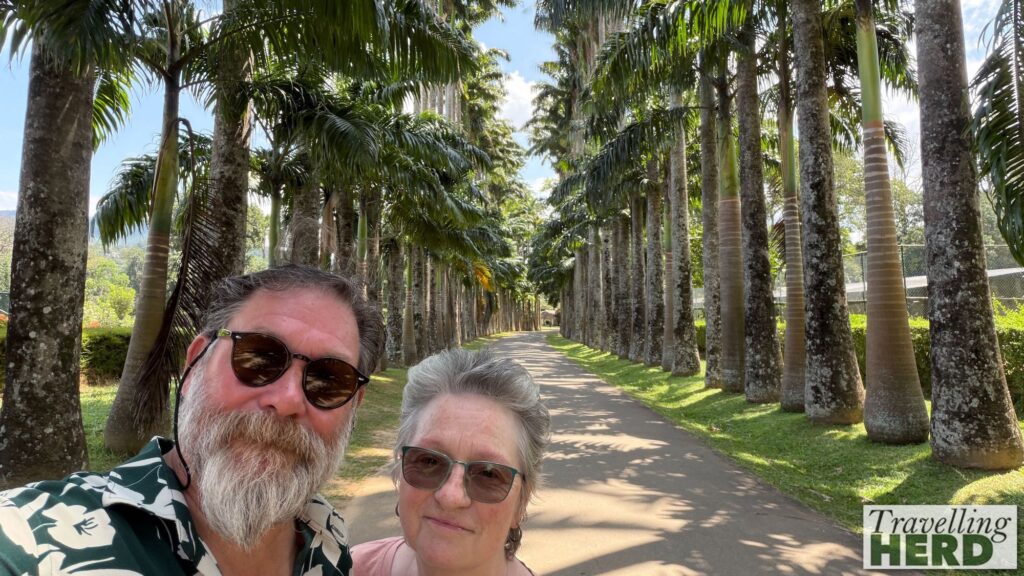
Selfie of the day:
Dish of the day:

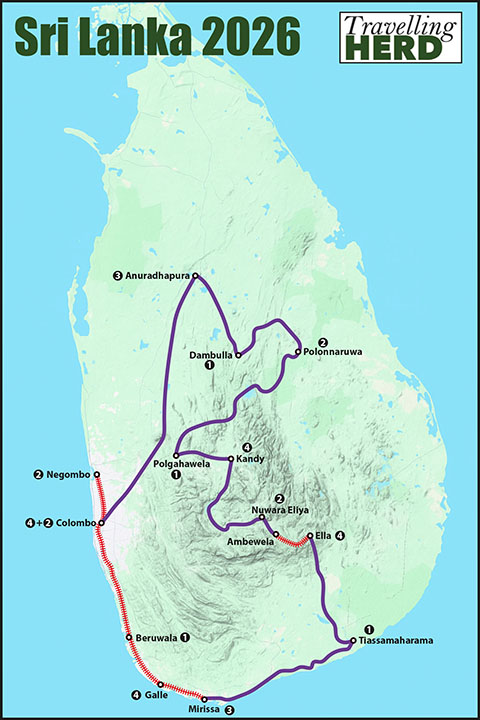
Route Map:
Discover more from TravellingHerd
Subscribe to get the latest posts sent to your email.