Read this blog: The one where we visit the cradle of Buddhism in Sri Lanka
Thursday 5th March 2026
We opted for another early start to try and avoid being out in the midday sun. Our first stop was the Mihintale Rock Temple on Missaka Pabbata – a mountain peak which is about 1,000 feet [300 m] high.
According to legend, Mahinda Thera met King Devanampiyatissa of Sri Lanka on this hilltop and discussed the teachings of Buddha with him, thereby bringing Buddhism to Sri Lanka in the third century BCE. Mihintale is a contraction of Mihin-Thalé which means ‘Mahinda’s hill’.
Visitors must climb a granite staircase and although the guidebooks say there are 1840 steps to the top, our guide informed us that we had already circumvented 400 of them by being driven to the car park. The steps are shaded by frangipani trees. For both of these things, we were truly grateful.

On a terrace stands the Sela Cetiya Stupa, also known as the Ambasthala Dagoba, which was built to enshrine a relic of the Buddha, specifically, the Urna Roma, or hair located between the eyebrows. Buddha is also said to have visited this location on the third occasion he came to Sri Lanka.

The highest point of Mihintale is Aradhana Gala or the ‘Rock of Invitation’. This is reached by a very steep, very uneven climb and Matilda baulked at about the tenth step. Our guide, Dilanka, was pleased to have the excuse to stay behind with ‘Madame’ as he has had to have major surgery on his ankle.

Robert confirmed the view from the top was spectacular.
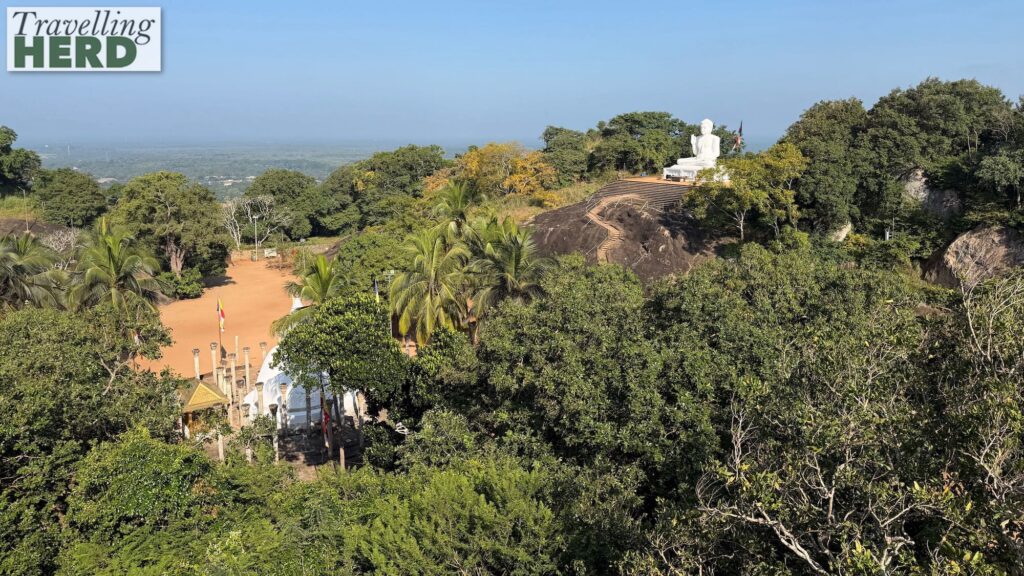
However, he found the descent more challenging than the climb.
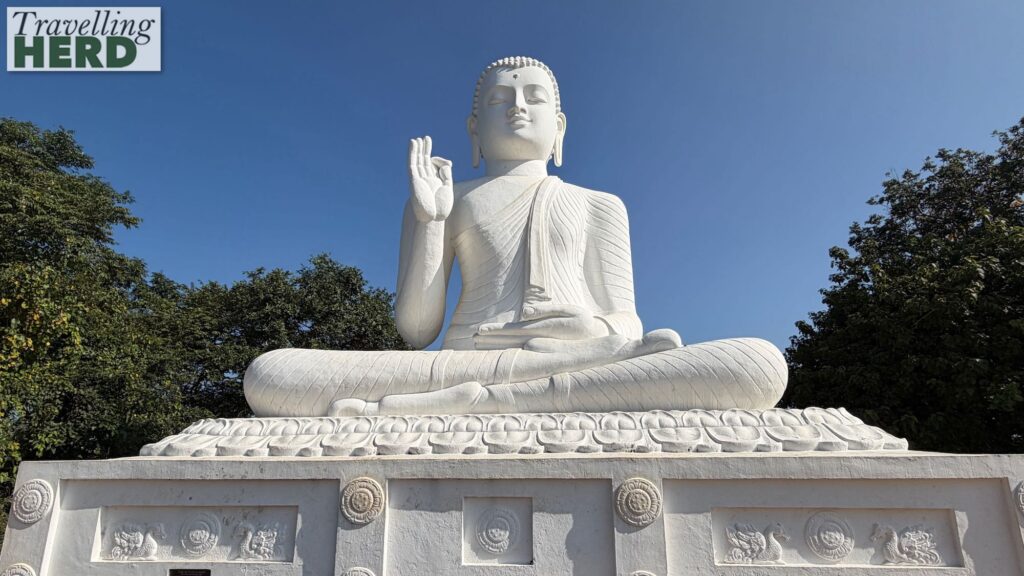
The steps carved into the rock up to the White Buddha statue were significantly more manageable and both Robert and Matilda made it to the top.

Sometimes it is impossible to take a photograph without tourists in the frame.
The White Buddha is a more recent installation than the rest of the site.
Dilanka suggested we go to Mahinda’s Cave before climbing up to the Mahaseya Dagoba Stupa. He made it sound as though this was the easy option. The path to Mahinda’s Cave was indeed downhill, but in this case what goes down must then come back up. The path went past a dwelling looking uncannily like it might belong in Hobbiton, The Shire, northwestern Middle Earth.
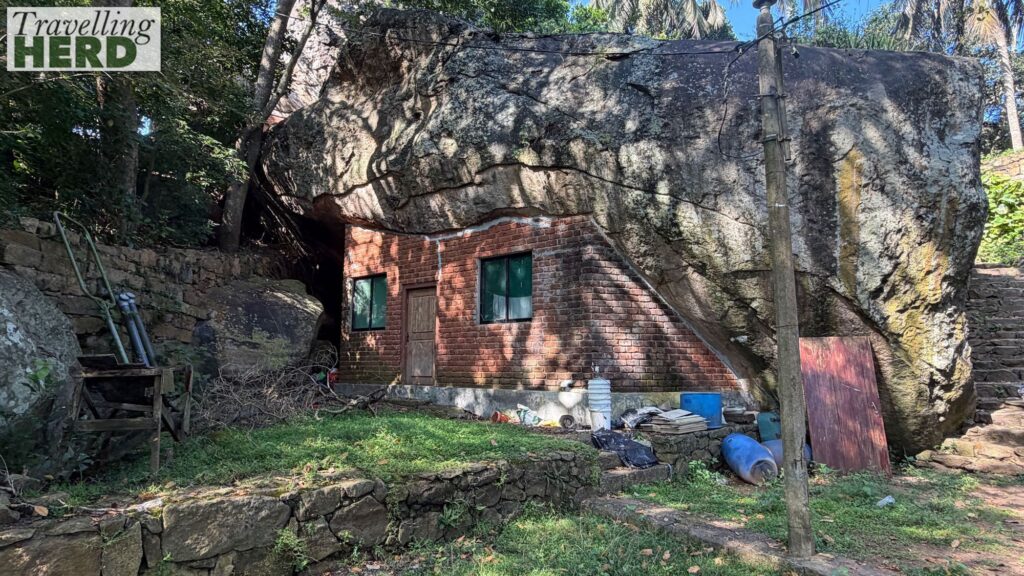
A flat slab beneath a huge concave rock formation is said to have been Mahinda’s bed.

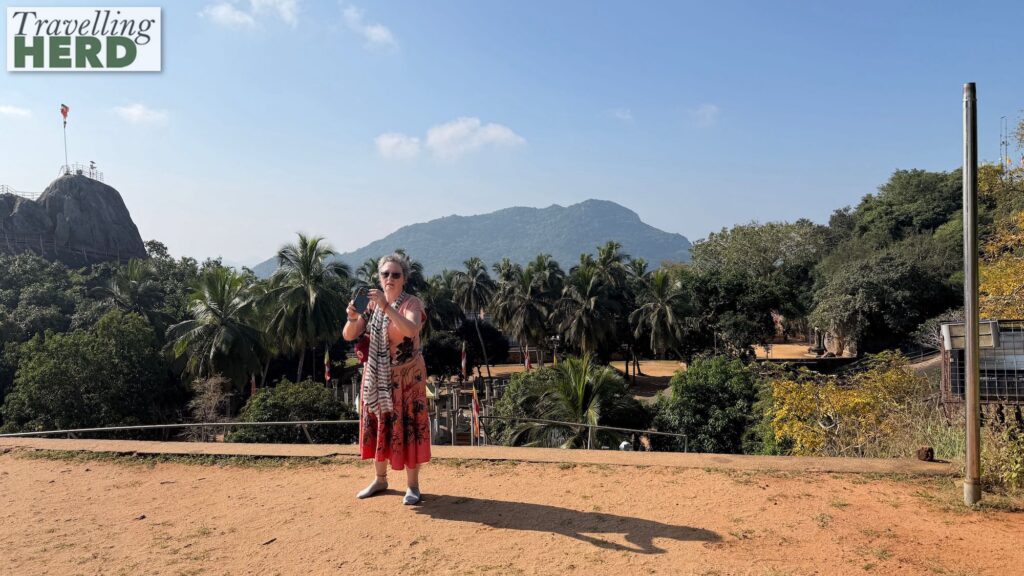
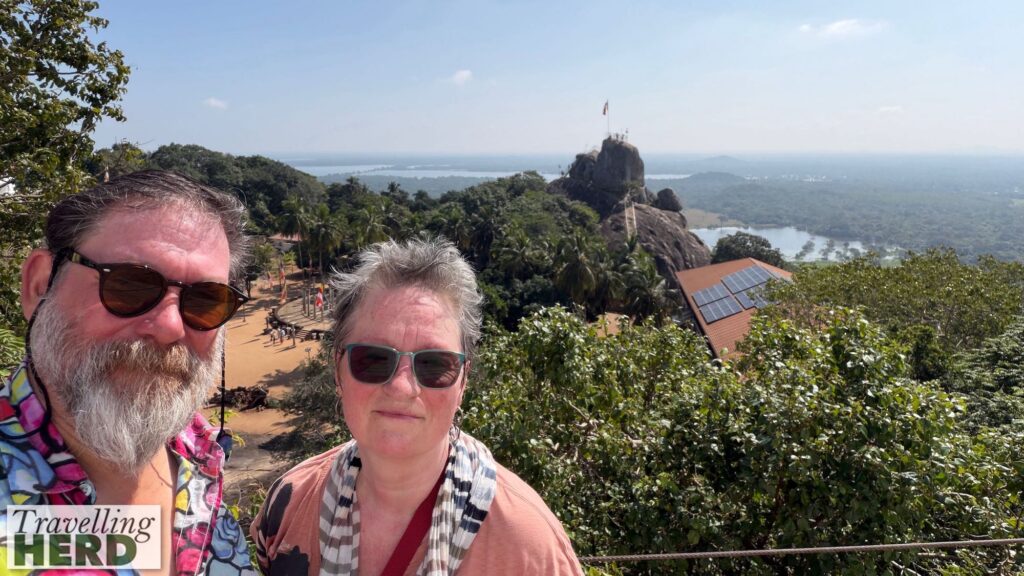
Once back at the terrace we climbed a further set of steps up to Mahaseya Dagoba. Mahinda’s relics are said to be interred here in a 45 foot high stupa which we somehow failed to photograph. We did however photograph the view [see Selfie of the day].

Also within the Mihintale complex, near the car park, are the remains of a ninth century hospital built by King Sena II [853-887AD]. Thirty one rooms each measuring about 3m2 [10ft2] are laid out around a central shrine which would have contained statues of the Buddha. Assuming two patients per room, the hospital could accommodate about 60 monks. A stone-lined tank has survived, believed to be the Janthagharaya — a bath in which patients could be immersed in healing herbs steeped in oil, a treatment that is still practiced in Sri Lanka today.

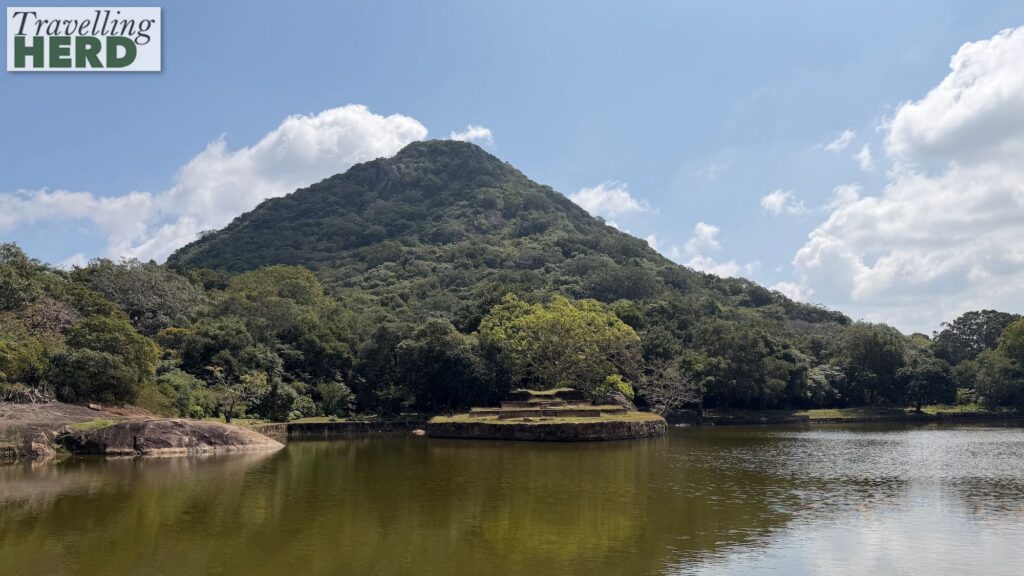
From Mihintale we drove to Kaludiya Pokuna Temple – another ancient monastic temple. This one is named for its dark reflective pond which we found is best viewed early or late in the day when the sun is low and the water is in shadow. We were there mid morning.
Driving between places we have often seen rice laid out to dry on the road, covering almost an entire lane. Dilanka is very knowledgeable about rice farming as he owns two acres of paddy field in his home town. Although it is illegal to dry rice on the highway, many people have nowhere else they can use and if it is not dried promptly after harvest it can go mouldy. Apparently in more rural areas the police can be lenient and turn a blind eye as it only takes a few hours to dry. The farmers walk through it to turn it, ensuring all the grains dry properly. [see Video of the day].

Our next stop was the Vessagiriya Monastery, also called Issarasamanarama which is part of the ruins of ancient Anuradhapura.
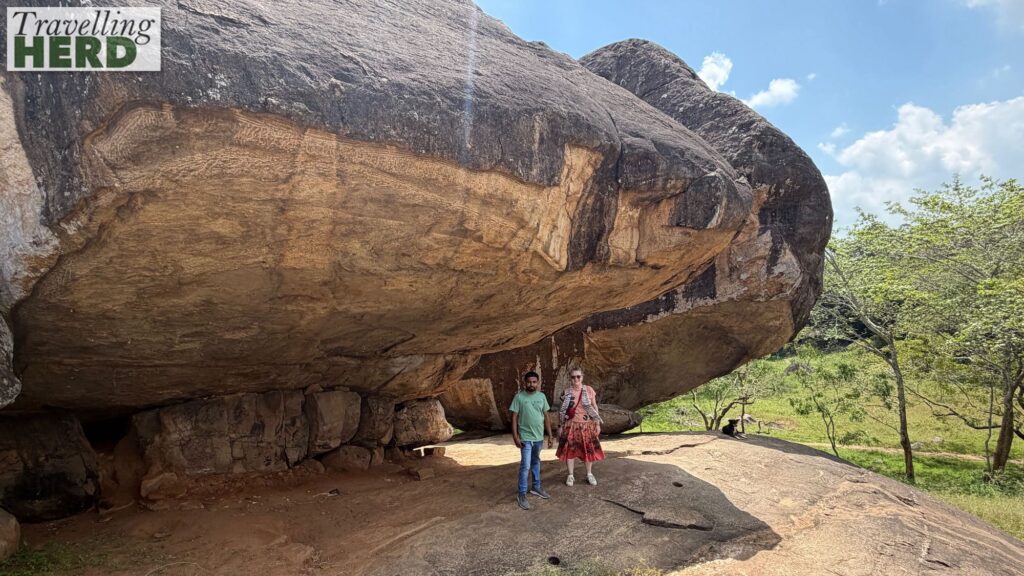
Vessagiriya was built among rocks. Begun during the reign of King Devanampiyatissa, who introduced Buddhism to Sri Lanka, it was subsequently expanded and became home to about 500 monks.
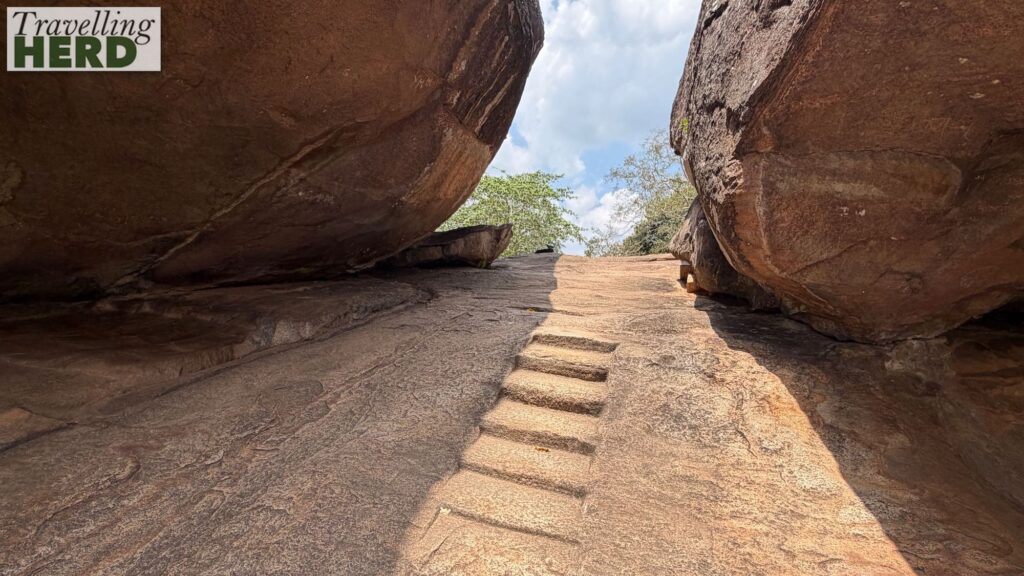
The dwellings were quarried from the rocks but would have been finished with wood and other materials which have since perished.

Later, back at our hotel, we were served with complimentary roasted cashew nuts which were very moreish and which we both declared to be Dish of the day. We seem to be the only people in the hotel following mass cancellations. The staff are very charming and helpful but it is quite disconcerting to be the sole focus for them all.
Video of the day:
Selfie of the day:
Dish of the day:

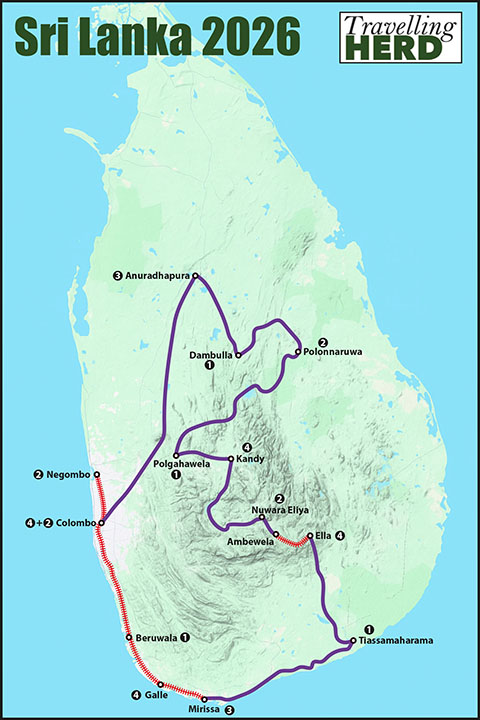
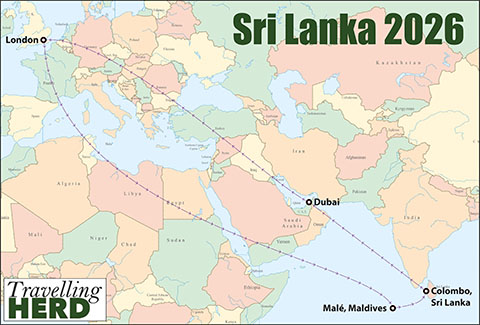
Route Map:
Discover more from TravellingHerd
Subscribe to get the latest posts sent to your email.