Read this blog: The one where we can’t hire a tuk tuk
Wednesday 25th and Thursday 26th February 2026
We were told that we had to get to the airport three hours before our scheduled flight time. This meant setting an alarm for 05:15 which was not ideal for two people still adjusting to a five hour time difference. Despite the fact that we had both been wide awake at about 01:00, we were sound asleep when the alarm went off.
Although Über is available, PickMe is the most commonly used ride-hailing app in Sri Lanka and it was recommended to us by local people for booking tuk tuks and cars. We had a very minimalist and disappointing breakfast: confusingly despite it being Ramadan the full service did not start till after sunrise. Robert then booked a small car on PickMe to take us and our luggage to the airport.
However, when we arrived at Velana International Airport we were shown a notice which gave the time that passengers for each flight were to be admitted into the departures hall. Our designated time was 06:30 and we were waved to one side to wait for eight minutes. As it turned out transit through the airport went very smoothly and we could probably have had longer in bed.
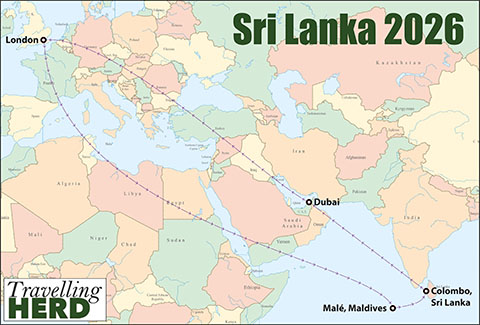
Our Sri Lankan Airlines flight from Malé to Columbo was comparatively empty – this might have accounted for the ease with which we passed through security, immigration and customs. Robert had been allocated a window seat and Matilda the one next to him, but was able to move to the empty row behind so she could also enjoy the view.
The Maldives comprise around 26 natural atolls which are essentially living geological structures spread along an ancient volcanic ridge. These were formed when the Indian tectonic plate moved north over the Reunion hotspot creating a chain of tall volcanic islands much like Hawaii. When volcanic activity ceased and the Earth’s crust cooled the volcanic islands slowly sank and coral grew in the warm waters around them. As the volcanoes continued to sink under their own weight, the coral correspondingly continued to grow up towards the light.
Once the volcanoes were completely submerged only coral and sand remained and the sea deposited sediment to form the low lying islands which exist today. The average height of the Maldives is just 1.5 metres [or 4 feet 11 inches] above sea level, making it very vulnerable to even small rises in the water level. Consequently, the country is a strong advocate for active climate change. Tourism is a major source of income for the Maldives but we did nevertheless feel guilty that visiting these beautiful islands would also have an adverse impact on them through climate change.
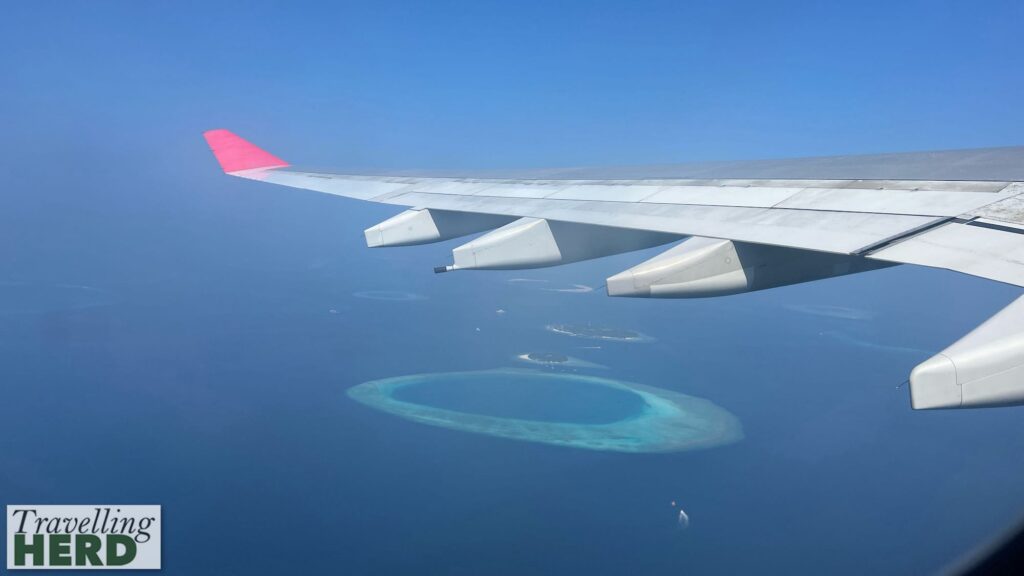
As residents of Downe, we were pleased to discover that Charles Darwin had developed the theory of atoll formation which suggests a process developing from a fringing reef to a barrier reef to a ring shaped atoll. Leaving the Maldives, the ring shaped atolls are clearly visible.
Robert had applied for visas before our arrival in Sri Lanka. However there was confusion amongst the immigration officials and we spent some time being directed to different queues. We were not the only ones told to join multiple different queues. Eventually we were told that everything was in order and we could have gone straight through border control. Robert knew that we would need to apply for a visa extension as we would be staying in Sri Lanka for over 30 days. During the queuing period we did however usefully discover that the on-line system was temporarily down. We therefore planned to allow time on Monday to apply in person for our visa extensions if needed.
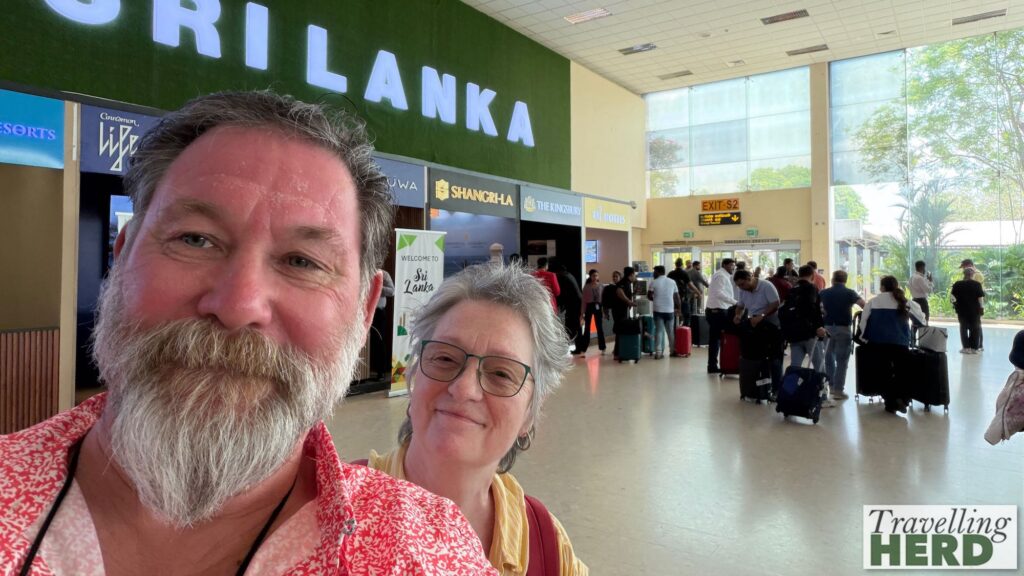
We were met by a driver to take us to Negombo and Robert celebrated our arrival in Sri Lanka with a selfie.
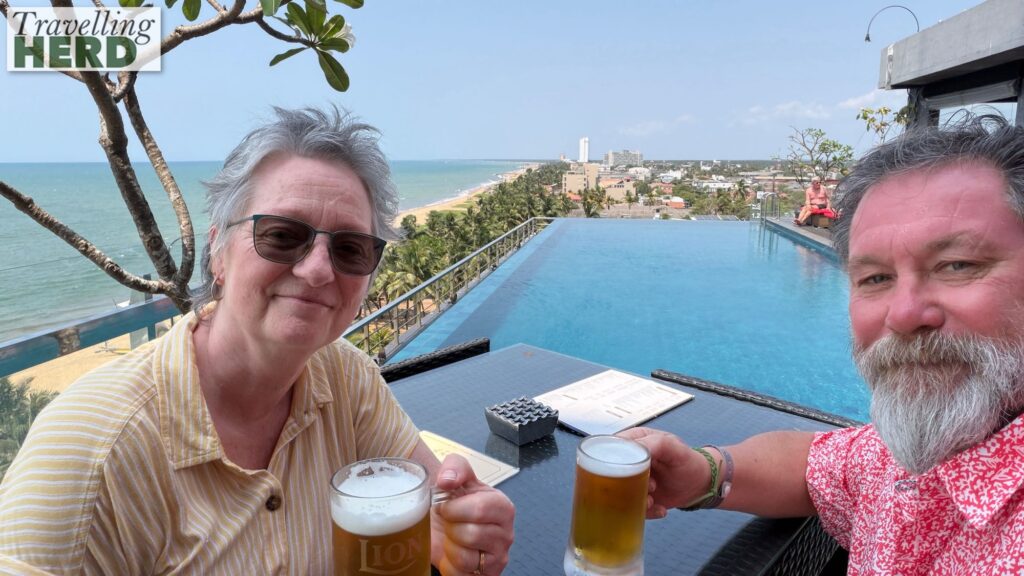
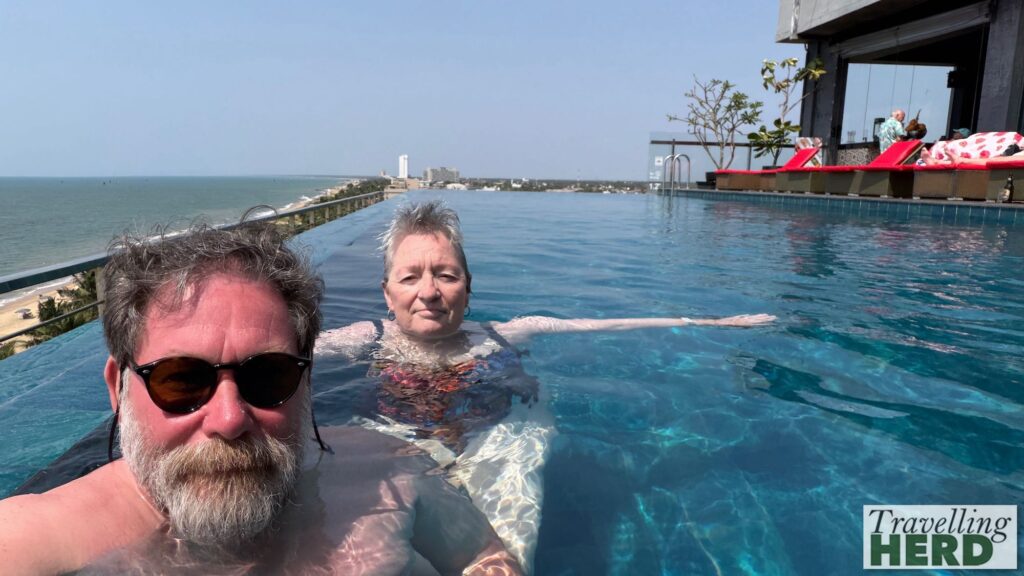
The Regal Réseau Hotel and Spa has an infinity pool next to the Sky Track Lounge which was being enjoyed not only by the guests. . .
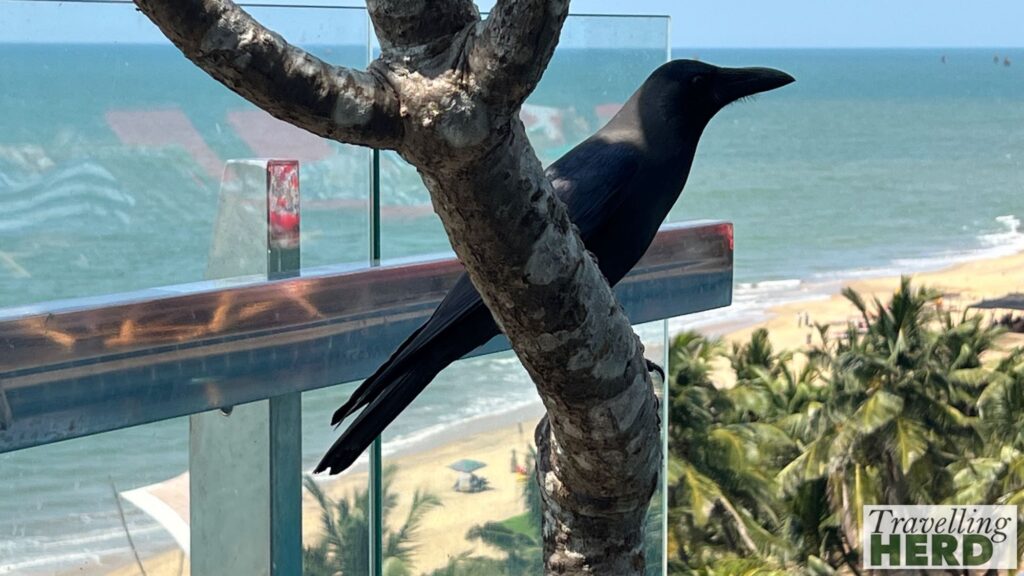
. . . but also by the crows who swooped low over the pool and watched closely. They were thankfully far less aggressive than seagulls in the UK.
Travelling on the scale we do, it would be a miracle if we didn’t face a few set backs or complications from time to time.
Hiccup number one on this tour involves driving licenses.
Robert discovered that it is possible to hire a tuk tuk to drive yourself. Matilda would have drawn the line at sitting in a vehicle he was in control of in an urban area but we both got excited about the prospect of hiring a self-drive tuk tuk in more rural Kandy. However, in order to obtain a Sri Lankan Driving Permit you need to have a paper based International Driving Licence [IDL]. We have both brought our UK driving licences with us but did not think to get a paper [IDL] which are only available in your home country.
Robert could not resist imagining the experience using AI. Note to self: get paper IDL before going away.

The following morning we booked a PickMe tuk tuk to take us to St Mary’s Church. This was considerably more relaxed than other tuk tuk rides we have taken.
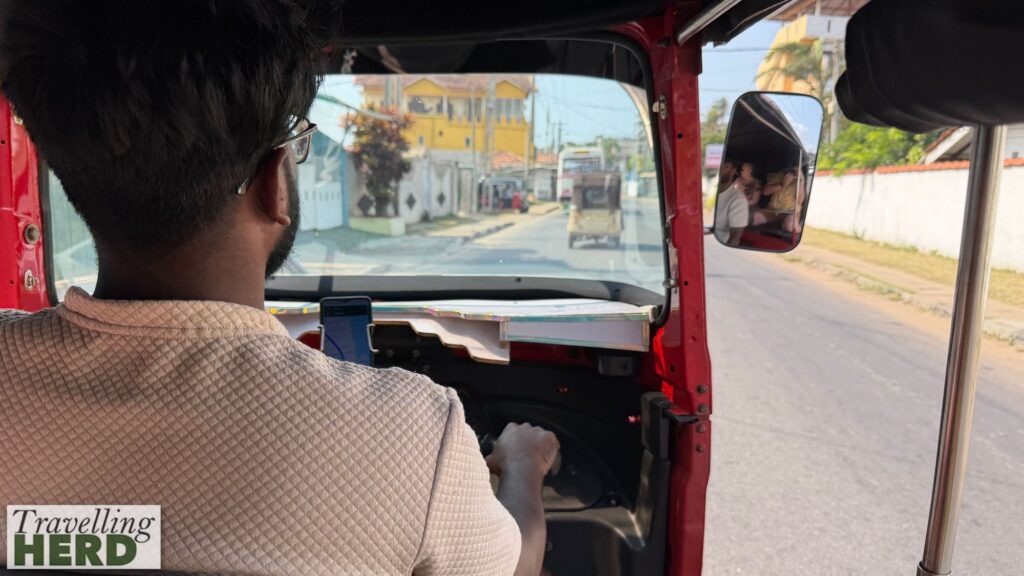
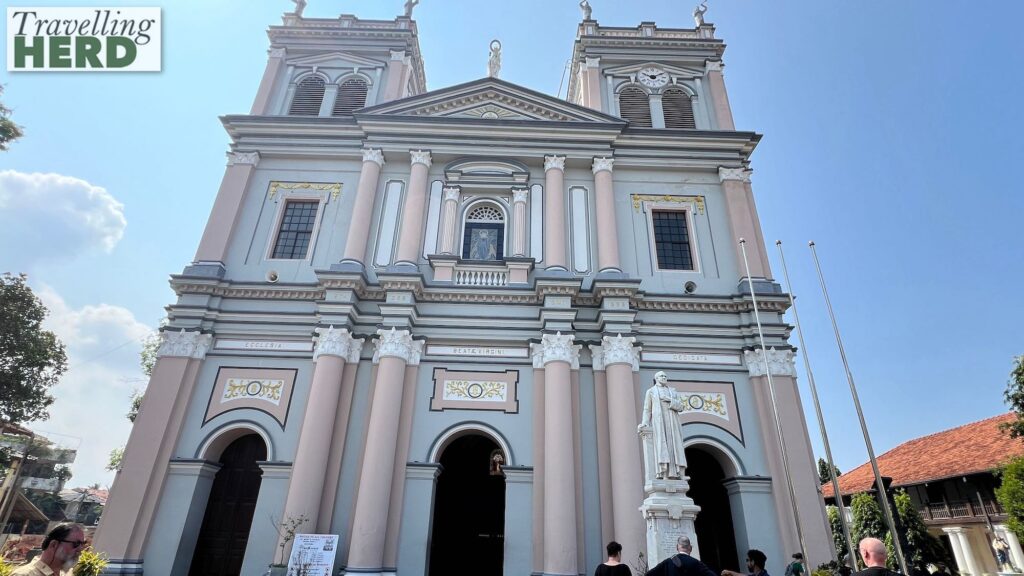
The pretty neoclassical St Mary’s Church is one of the largest Roman Catholic Churches in Sri Lanka. Negombo is apparently sometimes called “Little Rome” because, following the colonisation of Sri Lanka by the Portuguese, although the country is mostly Buddhist this area became predominantly Catholic and there are consequently many Roman Catholic Churches. Negombo also has active Muslin, Buddist and Hindu communities.
Indeed we were amused to see two cows walking towards us and assumed at this point we were in a Hindu area [see Video of the day].
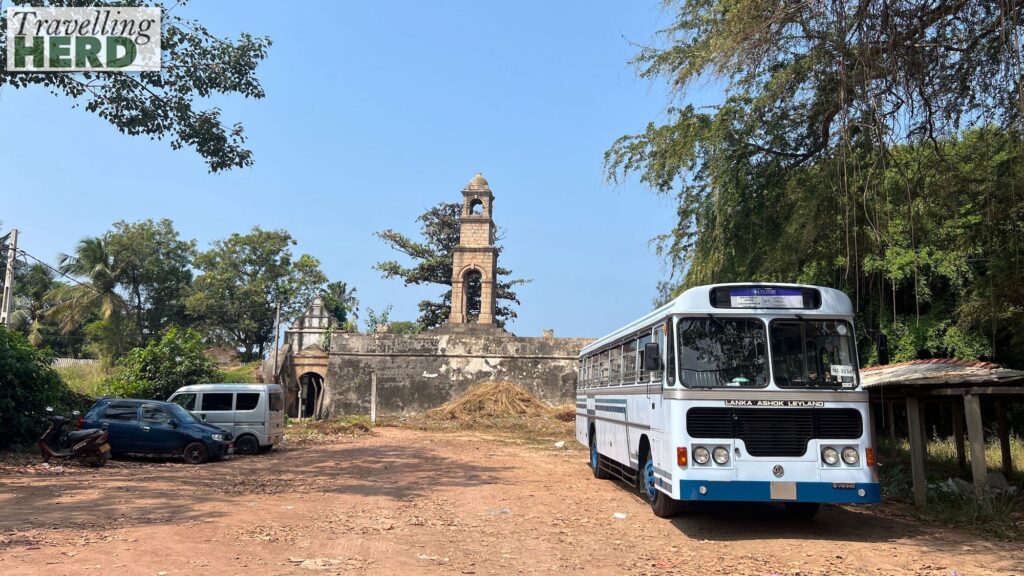
The old fort at Negombo is all that remains of defences originally built by the Portuguese, then rebuilt by the Dutch in the 17th century. Much of the structure was subsequently repurposed by the British to create a prison which is still in use. Only part of the eastern rampart, an arched gateway and a clock tower now remain.
Negombo was originally a busy fishing village and the fish market is still an essential and vibrant part of the community. We went down to see this well-established centre of commerce but could smell it long before we got there.
Visitors are advised not to wear open-toed shoes or flip flops. Matilda was also glad she had worn a skirt and not long trousers as these would have trailed in the water, blood and fish guts which swill around the floor.
As well as the fresh fish stalls . . .

. . . fish are also gutted, split open and laid out to dry. In 30°C heat this process only takes about two days depending on the size of the fish. Once the drying process has started, after about a day the fish lose their smell.
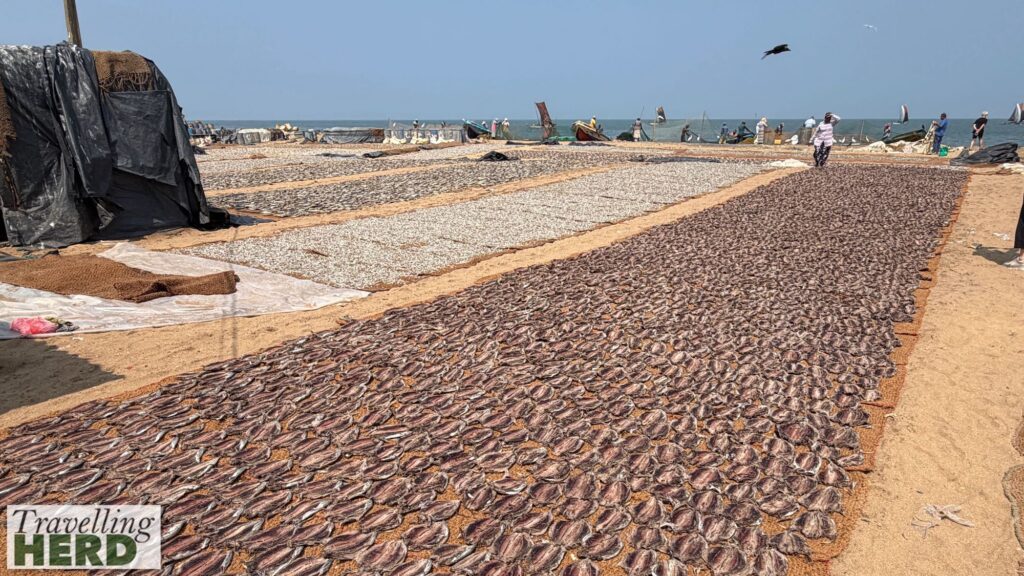
Inexplicably, the cranes flock round the boats landing the day’s catch but the drying fish seem to be left alone.
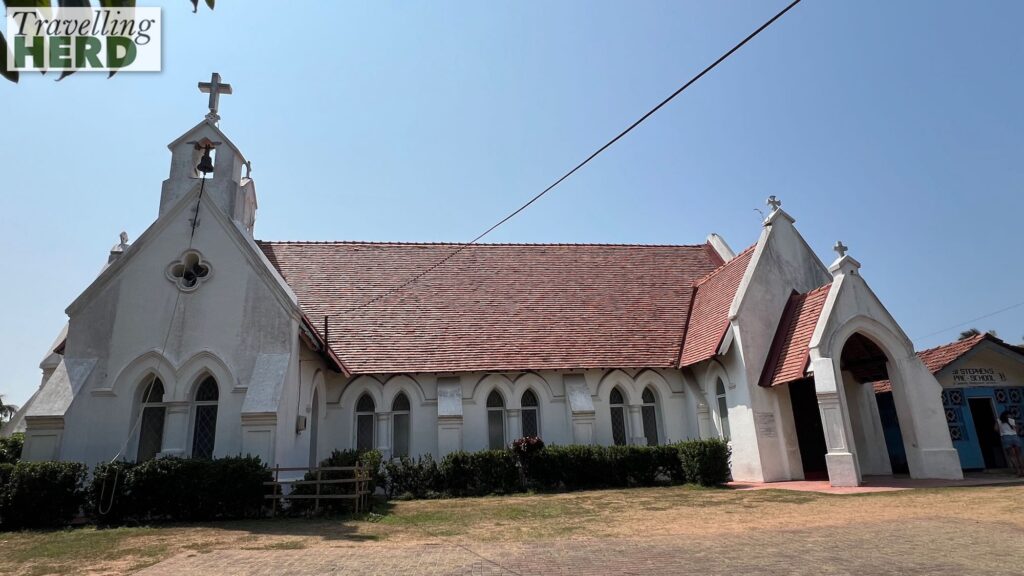
It was a short walk to St Stephen’s Church which was closed when we visited but was built on one of the surviving bastions of the Dutch Fort.
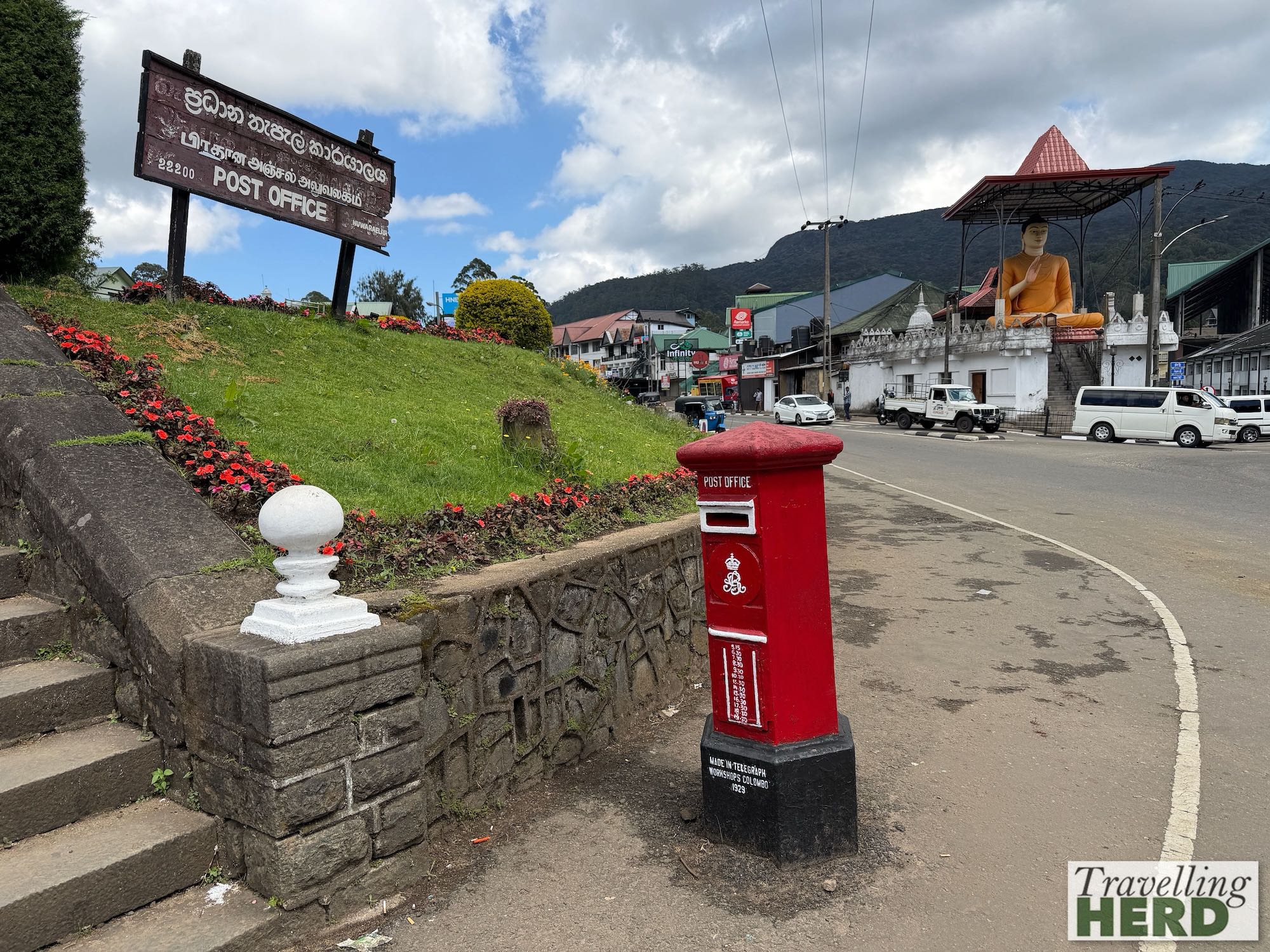
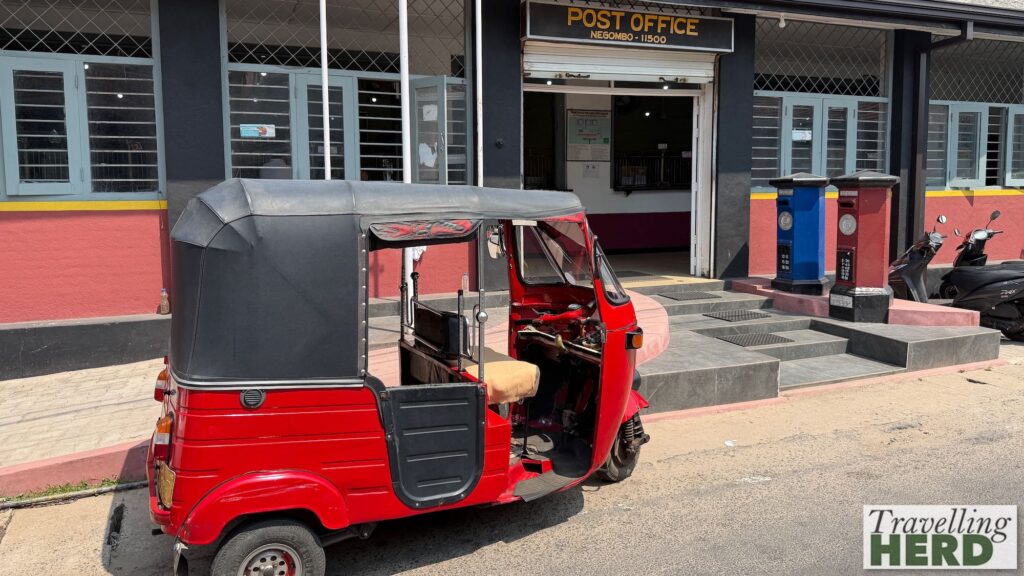
We have a niece who is very interested in post boxes and we often take photos when we are out and about. We could not walk past the Post Office without popping in and taking a photo. It seemed as though we had walked into a time warp.
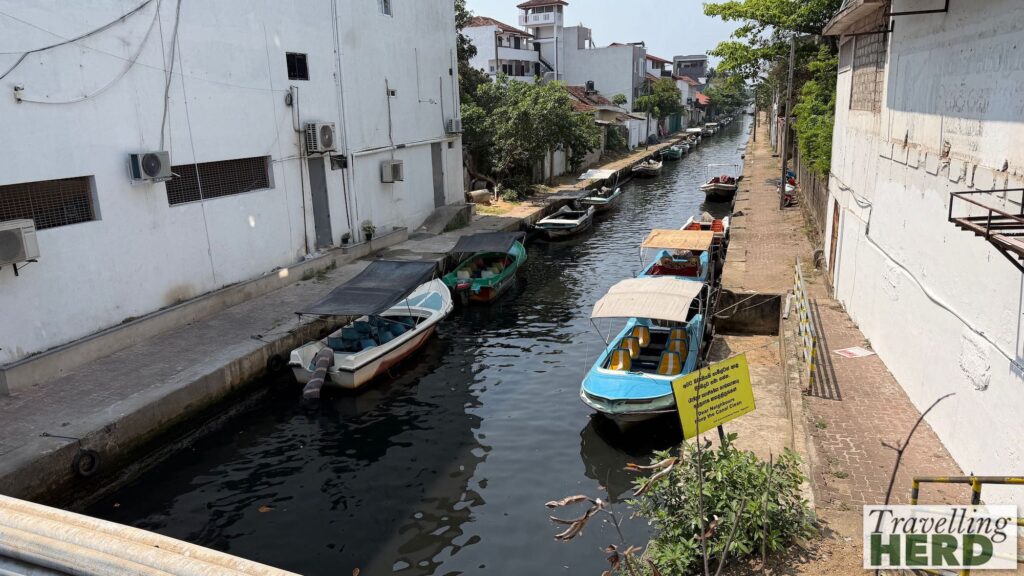
The 14.5k network of canals are also a legacy of the colonial eras: both the Dutch and the British built canals which were used to transport goods including cinnamon and spices. The Hamilton Canal is also sometimes known as the Dutch canal even though it was built by the British.
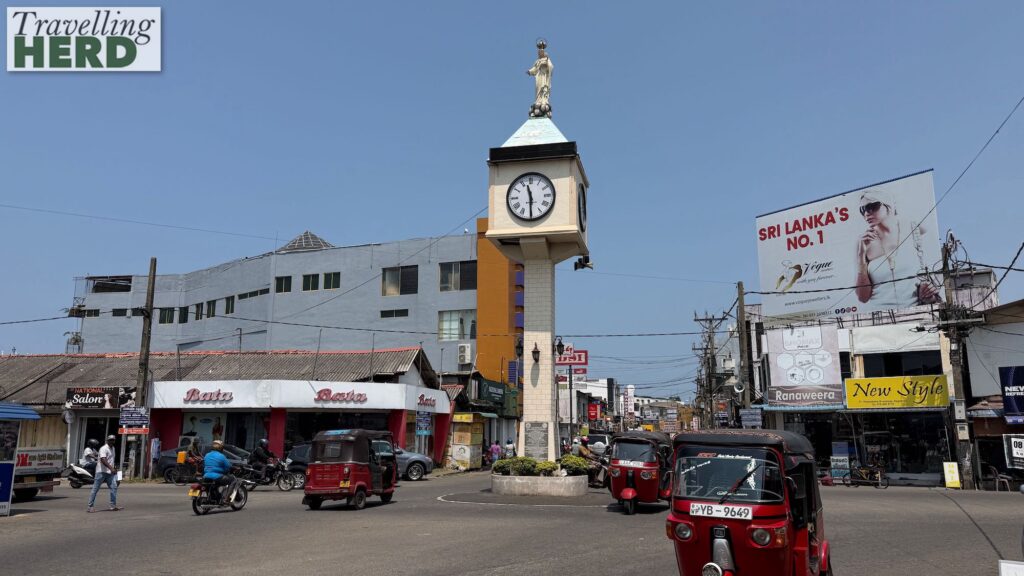
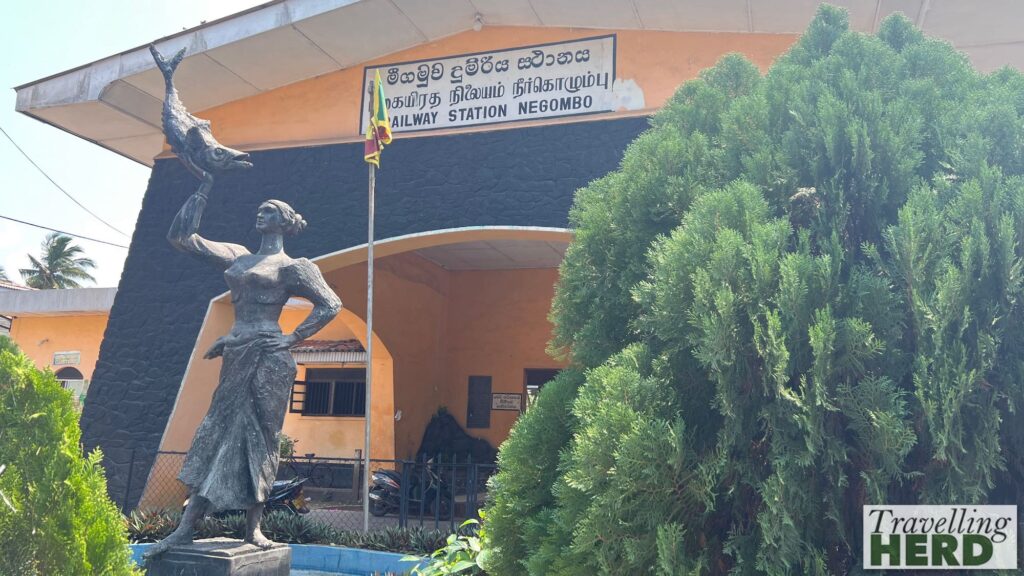
We decided we would drop in to the railway station as we would be catching a train in the morning. We walked past the John Chamara clock tower, which is topped by a religious statue (and no seagull).
Whilst at Negombo Railway Station, a statue celebrates the local fishing trade.
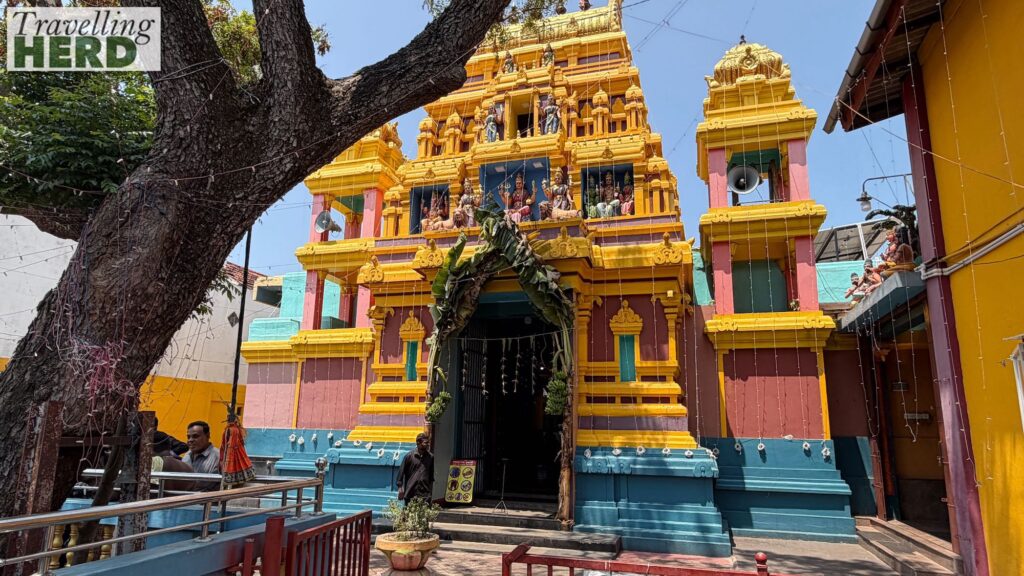
We passed the Sri Singama Kali Amman Kovil Shrine which was impressively vibrant and colourful.
Next we visited St Sebastian Church, which is Gothic Revival in style and is based on Reims Cathedral in France.
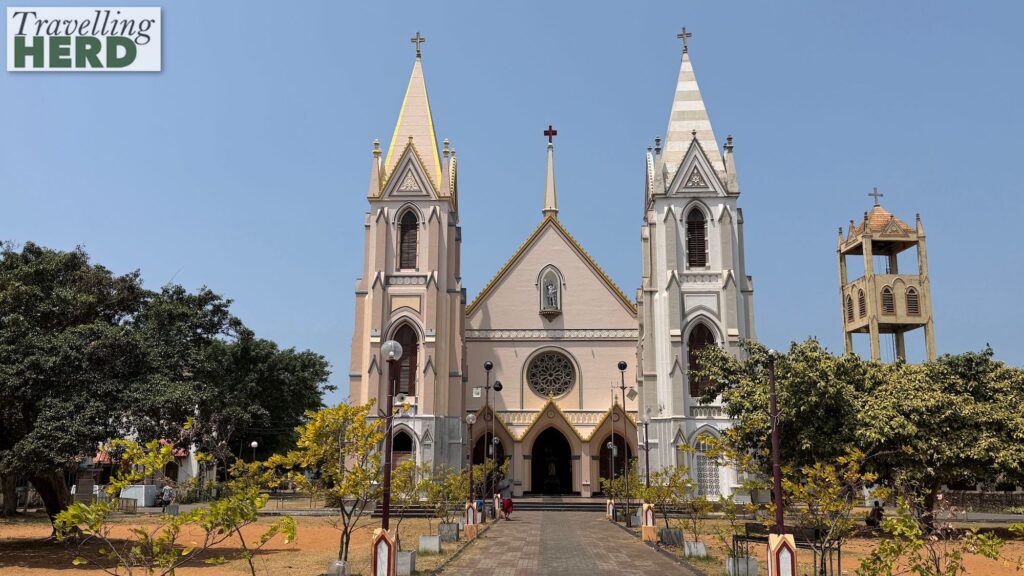
Saint Sebastian is the patron saint of the city of Negombo. Churches in Asia often have doors down each side of the nave which are opened for ventilation. This means there is often a welcome breeze but this benefit is often offset by the presence of pigeons and their deposits on the pews.

Matilda felt that either she started her panoramic in the wrong place or she carried on for too long. Robert explained that it goes 270º and it is correct.
From here we decided to promenade along the beach back to our hotel . . .
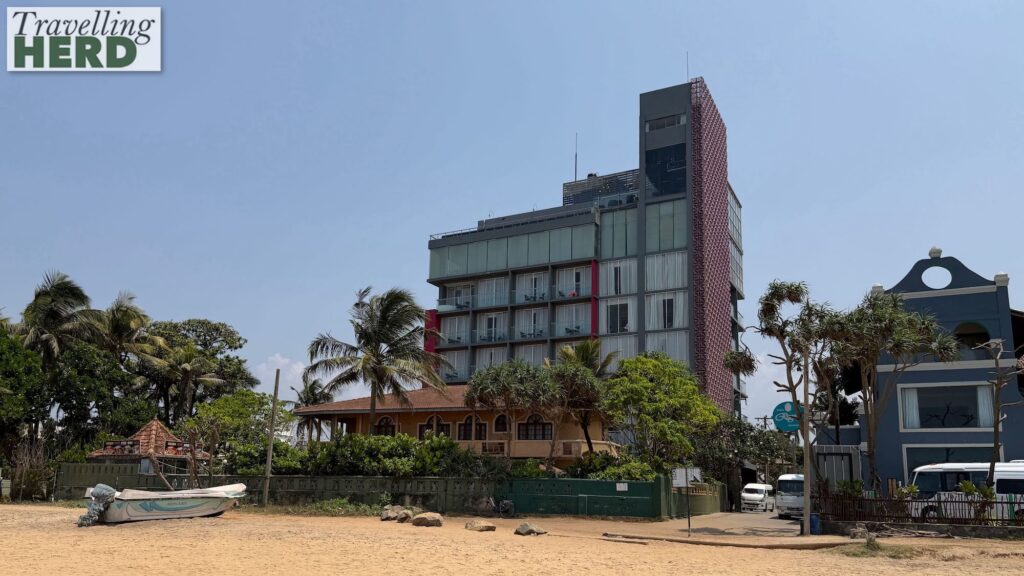
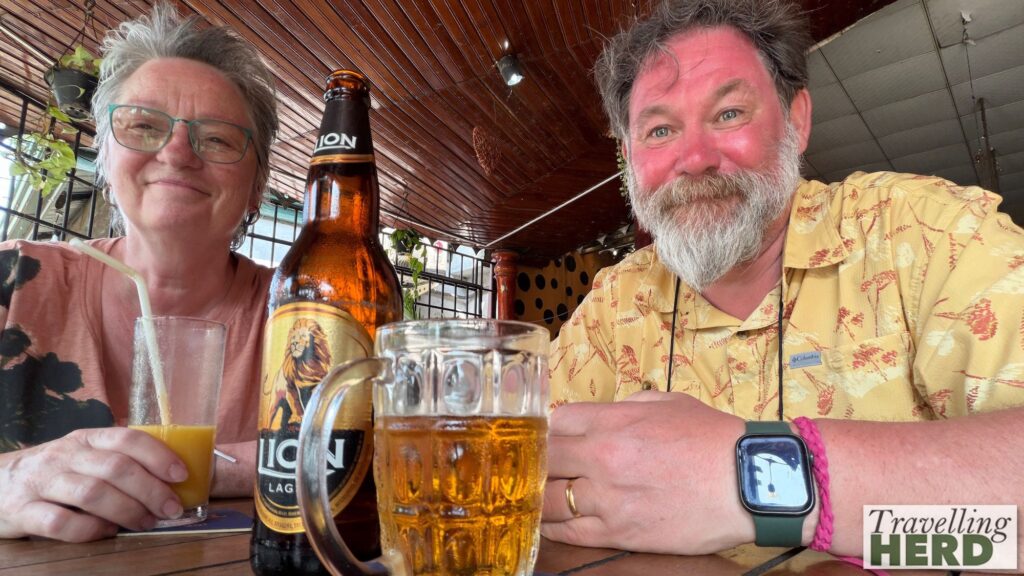
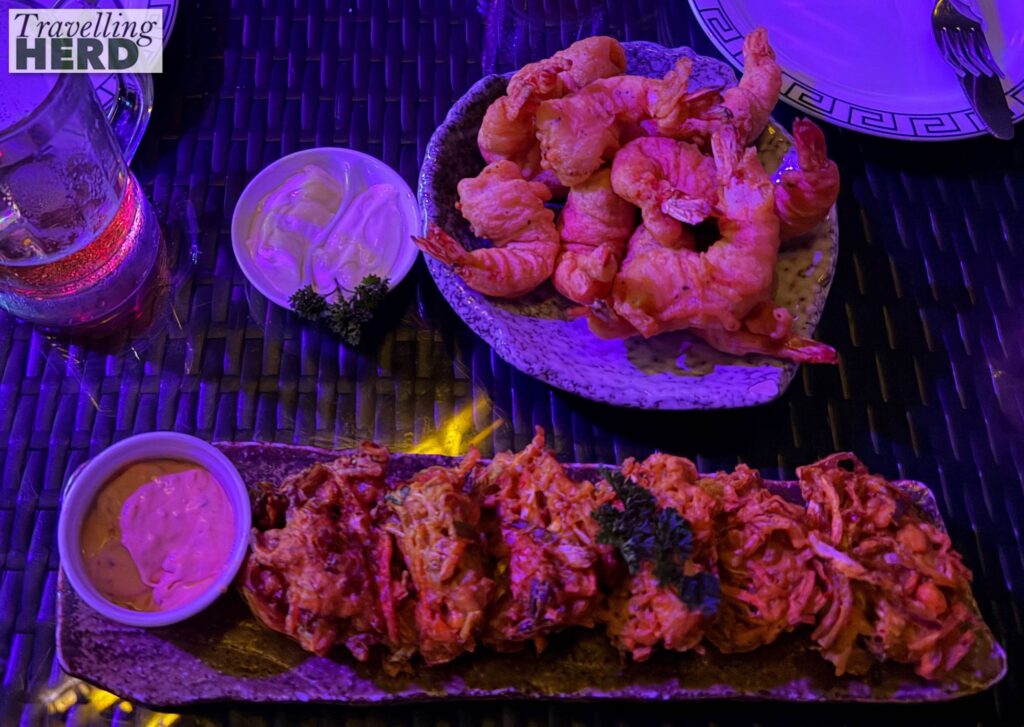
. . . for a refreshing dip in the pool to lower our core body temperature and to revive ourselves with a cold drink [see Selfie of the day] and later some bar snacks [see Dish of the day]
Video of the day:
Selfie of the day:
Dish of the day:
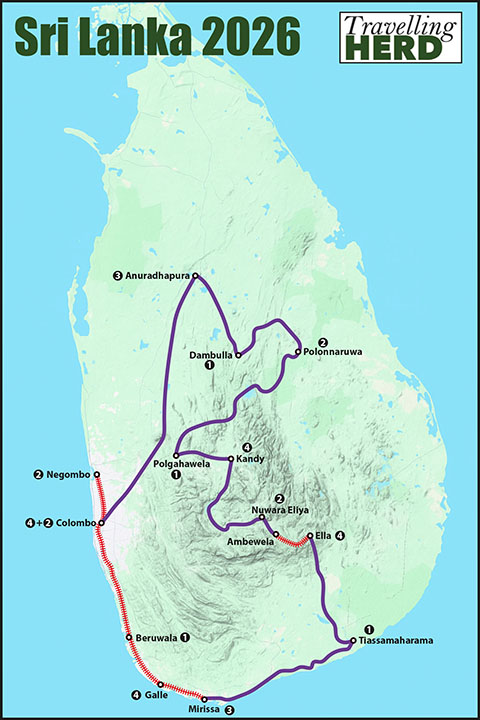
Route Map:
Discover more from TravellingHerd
Subscribe to get the latest posts sent to your email.